
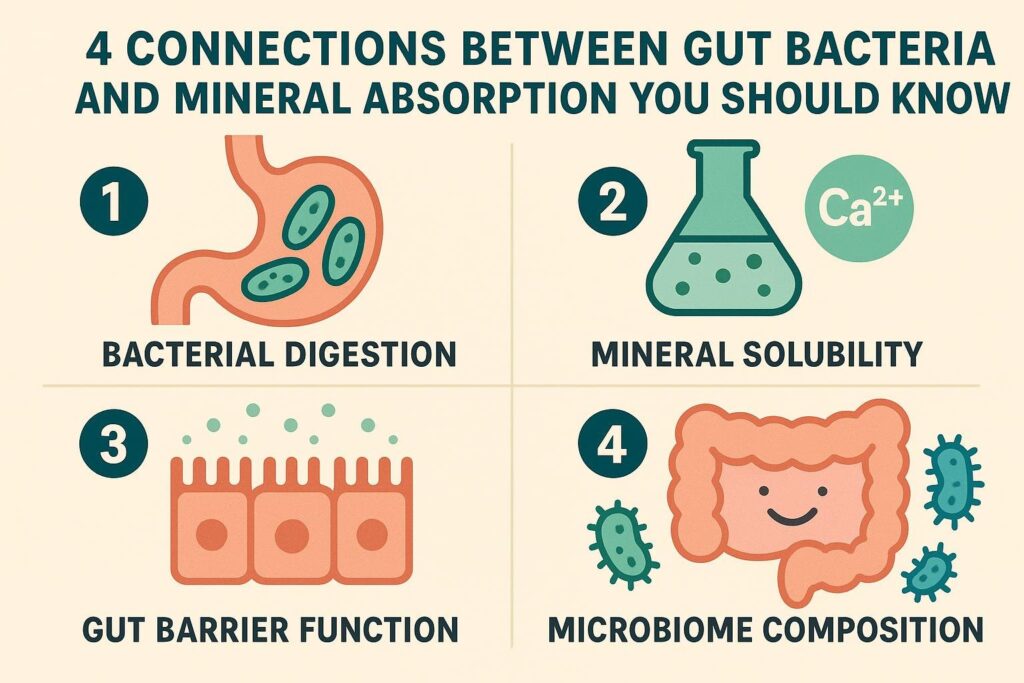
The human gut is a fascinating world where trillions of bacteria play crucial roles in maintaining health. Among their important functions, gut bacteria significantly influence mineral absorption. This article explores four key connections between gut bacteria and mineral absorption, potentially enhancing your understanding of this intricate relationship.
1. Gut Bacteria Enhance Mineral Bioavailability
Gut bacteria contribute to the breakdown of complex food structures, aiding in the release and absorption of minerals. These microorganisms produce enzymes that assist in decomposing fibers and other indigestible components. This process increases the bioavailability of essential minerals such as calcium, magnesium, and iron. When food structures break down efficiently, minerals become easier for the body to absorb.
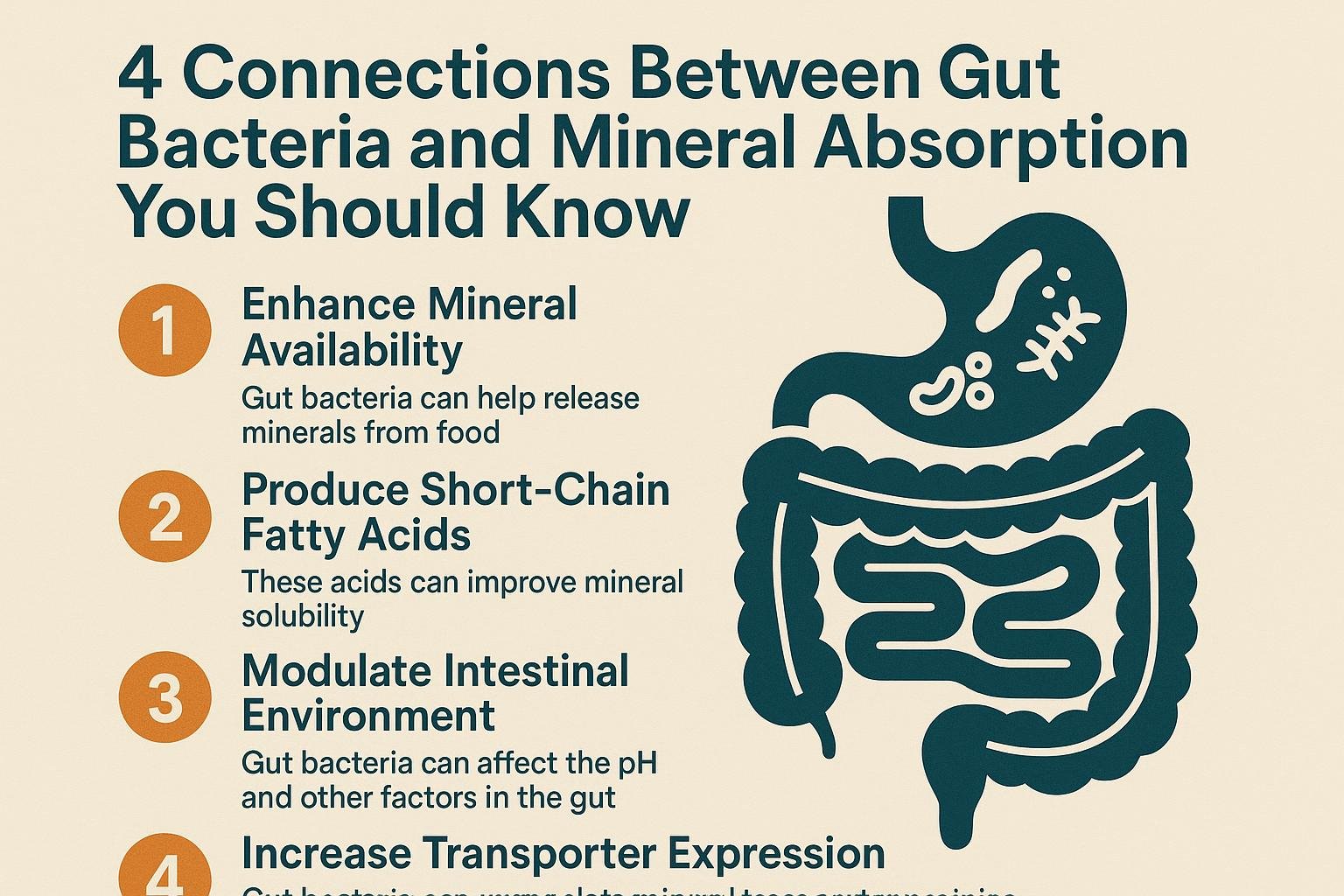
For example, the Lactobacillus species can enhance calcium absorption, a vital mineral for bone health. Their presence in the gut ensures that calcium is efficiently extracted from the food consumed, maximizing the mineral’s health benefits.
2. Certain Bacteria Protect Against Mineral Loss
Some gut bacteria produce short-chain fatty acids (SCFAs), which help maintain the integrity of the gut lining. A healthy gut lining reduces the risk of inflammation and nutrient loss. When the lining remains intact, essential minerals are better retained and absorbed by the body.
Acetate and butyrate are prime examples of SCFAs produced by bacteria such as Bacteroidetes. These acids not only promote mineral retention but also improve gut health by preventing leaks that could lead to inflammation and reduced absorption efficiency.
3. Bacteria Compete with Harmful Organisms
A balanced gut flora prevents harmful bacteria from overgrowing and causing harm. When pathogenic bacteria proliferate, they can disrupt mineral absorption. They may compete with the body for minerals, potentially leading to deficiencies.
Probiotic bacteria like Bifidobacteria help deter harmful microorganisms by maintaining a balanced and competitive environment. This competitive exclusion ensures more minerals are available for the body’s use rather than being consumed by harmful entities that may bring about deficiencies.
4. Bacteria Influence Mineral Transport Proteins
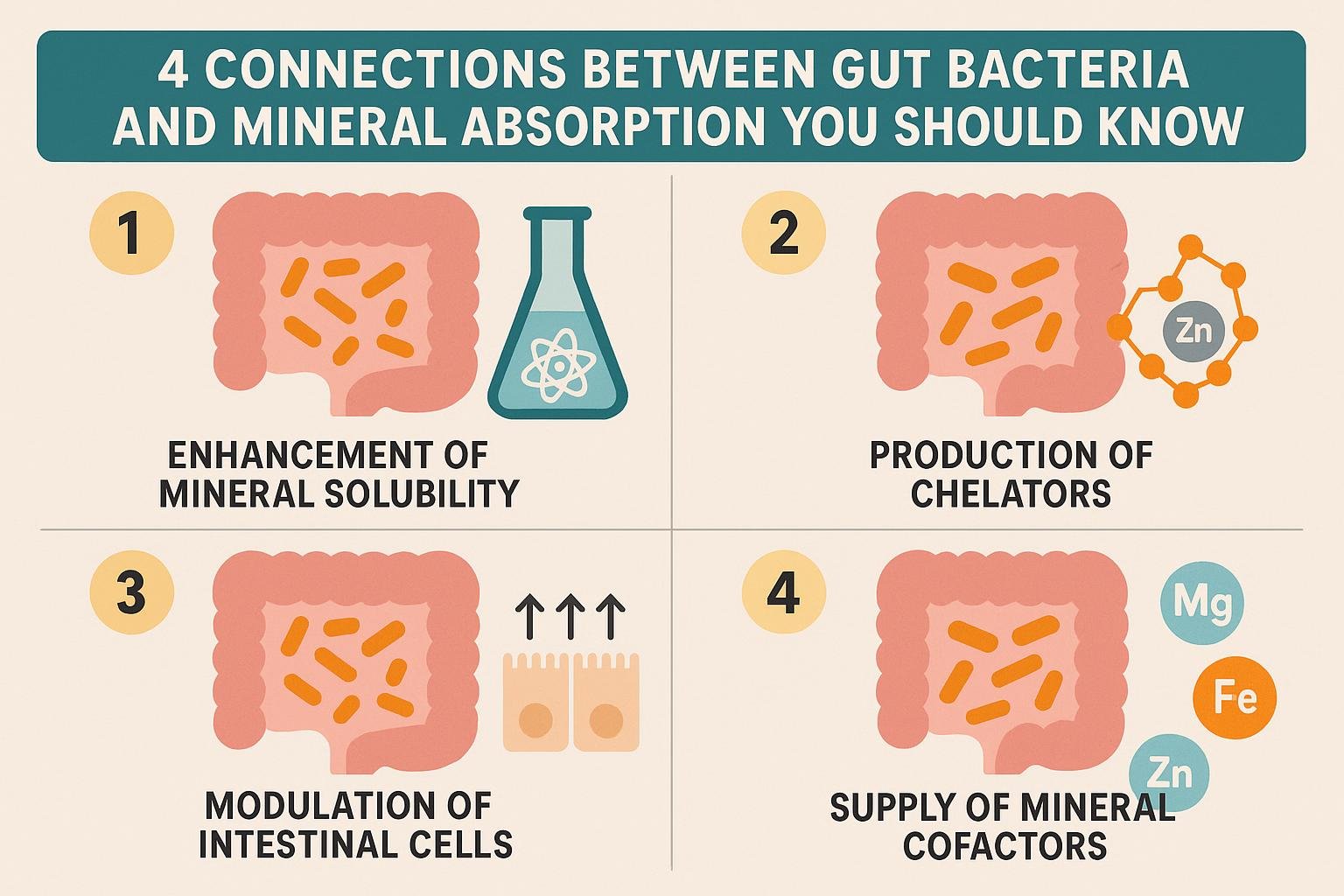
Minerals require transport proteins to travel across the gut lining into the bloodstream. Gut bacteria can influence the expression of these proteins, optimizing mineral transport and, consequently, absorption. For instance, specific gut flora can upregulate the expression of proteins linked to iron absorption, thereby enhancing iron uptake in individuals.
Additionally, research suggests that probiotics might modulate the gut environment, favoring processes that enhance the bioactivity of these transport proteins. Such adaptations can boost the body’s efficiency in utilizing available minerals, contributing to overall mineral homeostasis.
Additional Insights into Gut Bacteria and Mineral Interactions
Pros of Gut Bacteria in Mineral Absorption
- Improved Nutrient Availability: Gut bacteria enhance the availability and absorption of essential minerals, supporting overall health.
- Gut Health Enhancement: By promoting healthy gut function, bacteria contribute to reduced inflammation and better nutrient retention.
- Protection Against Harmful Bacteria: A healthy bacterial balance in the gut can prevent the growth of harmful bacteria, which can otherwise lead to deficiencies.
Cons of Imbalanced Gut Bacteria
- Potential Nutrient Competition: When harmful bacteria dominate, they might compete with the host for essential minerals, leading to deficiencies.
- Increased Risk of Inflammation: An imbalanced gut flora might compromise the intestinal lining, reducing its effectiveness and impacting mineral absorption.
Examples of Probiotic Foods
Incorporating probiotic foods into your diet can help support a healthy gut bacterial balance. Such foods include:
- Yogurt: Contains live cultures of Lactobacillus, aiding in calcium absorption.
- Kefir: A fermented milk drink rich in various strains of beneficial bacteria and yeast.
- Sauerkraut: Fermented cabbage that provides several strains of healthy bacteria.
- Kimchi: A spicy fermented dish full of probiotics.
- Miso: A fermented soybean paste that adds flavor and beneficial bacteria to soups and dishes.
Through diet and lifestyle, individuals can foster a beneficial bacterial community in their gut, promoting improved mineral absorption and overall health.
Conclusion
Understanding the connection between gut bacteria and mineral absorption can open doors to better health management. Gut bacteria play a crucial role in enhancing nutrient availability, protecting against nutrient loss, competing against harmful organisms, and influencing mineral transport. By maintaining a healthy balance of gut bacteria, individuals can maximize the bioavailability and utilization of essential minerals, supporting overall well-being.