
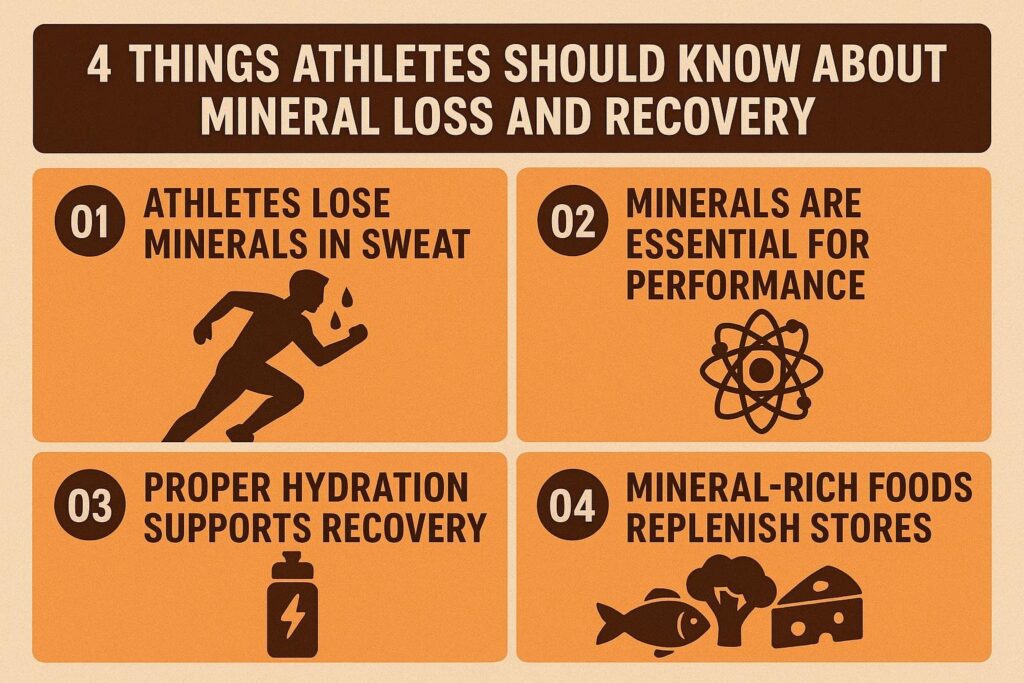
Minerals play a crucial role in the health of athletes. They support various bodily functions, from muscle contraction to hydration. However, intense physical activity can lead to significant mineral loss. Understanding mineral loss and recovery is essential for maintaining performance and overall well-being. Here are four key insights for athletes about mineral loss and recovery.
1. Causes of Mineral Loss
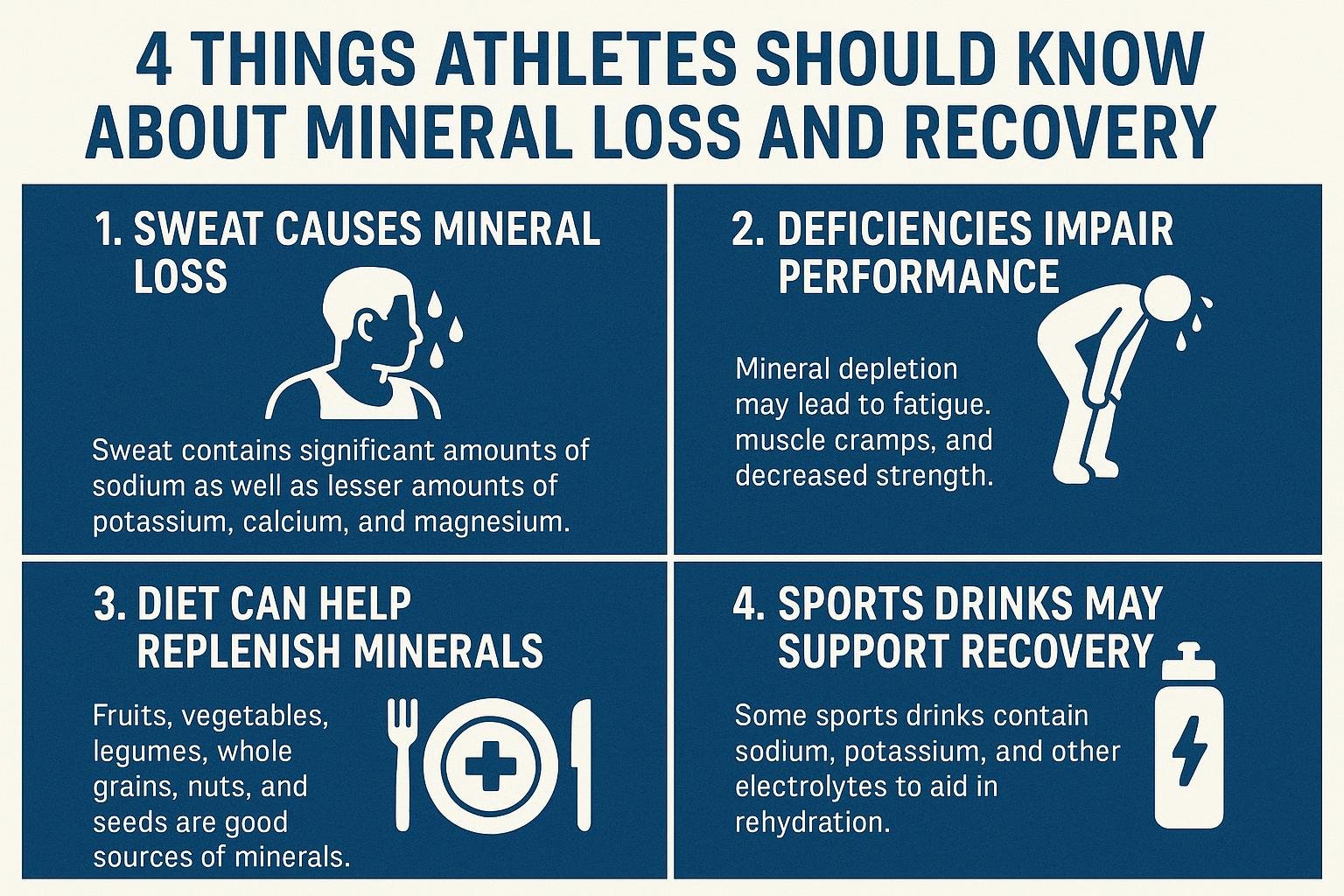
Intense exercise causes mineral loss. Sweating, respiration, and urine contribute to this loss. The most common minerals lost include sodium, potassium, calcium, and magnesium.
- Sweating: During exercise, athletes sweat to cool their bodies. Sweat contains sodium and potassium, leading to their loss. These minerals are vital for nerve function and muscle contraction.
- Respiration: Breathing heavily while exercising causes water loss through evaporation. This process can lead to an indirect loss of electrolytes, including sodium and chloride.
- Urine: Training increases blood flow to vital organs. This upsurge boosts kidney function, which can elevate mineral excretion in urine.
By knowing these causes, athletes can better manage their training and nutrition to minimize mineral loss.
2. Effects of Mineral Loss on Performance
Mineral loss affects athletic performance negatively. Without adequate levels of key minerals, athletes may experience several symptoms:
- Fatigue: Lack of sodium and potassium can lead to muscle fatigue and cramps. These symptoms hinder endurance and overall strength.
- Dehydration: Loss of electrolytes, especially sodium, affects hydration balance. Dehydrated athletes tire quickly and lose speed.
- Bone Health: Calcium is crucial for bone strength. Insufficient calcium leads to weaker bones and a higher risk of fractures.
- Mental Function: Magnesium influences neurotransmission. Its deficiency can cause confusion and poor coordination.
Recognizing these effects allows athletes to address mineral deficiencies promptly.
3. Recovery Strategies
Effective recovery strategies involve replenishing lost minerals. Athletes should incorporate certain practices to ensure mineral balance and maintain high performance levels.
Diet
- Electrolyte-rich Foods: Consuming bananas, avocados, and spinach helps restore sodium and potassium levels. Dairy products and leafy greens are excellent calcium sources. Nuts and whole grains provide magnesium.
- Supplements: Some athletes may need supplements, especially if they struggle to meet mineral needs through diet alone. Always consult a dietitian before starting supplements.
Hydration
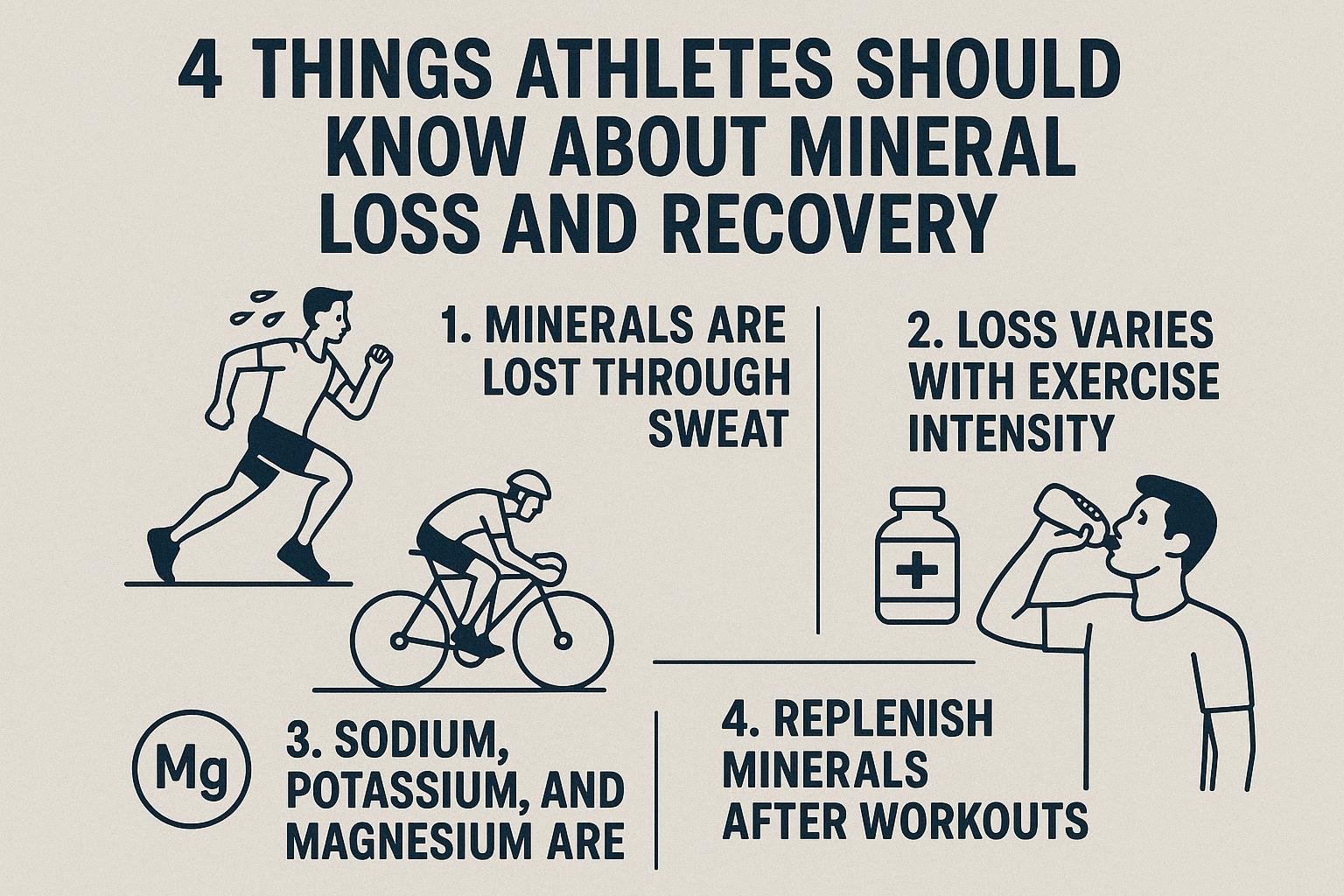
- Electrolyte Drinks: Specially formulated sports drinks replenish lost electrolytes like sodium and potassium. Drinking these during and after exercise can help maintain proper hydration levels.
- Water Consumption: Pure water is essential to replenish fluid loss. Athletes should drink water regularly throughout their training sessions.
Monitoring
- Sweat Tests: These tests measure the sodium concentration in sweat. Athletes can use this information to tailor their hydration strategies.
- Blood Work: Regular blood tests ensure levels of key minerals remain stable. They help identify deficiencies early.
By implementing these recovery strategies, athletes can optimize their mineral intake and recovery time.
4. Regular Monitoring and Adjustment
Mineral needs vary between athletes. Factors like age, gender, body composition, and exercise intensity affect individual needs. It is important for athletes to monitor their mineral levels regularly.
- Personalized Plans: Individualized nutrition and hydration plans are recommended. These plans should be adjusted based on monitoring data and any changes in training intensity.
- Consult a Professional: Regular check-ins with sports nutritionists and healthcare providers ensure comprehensive health monitoring. Professionals can provide tailored advice for managing mineral levels.
Developing a routine of regular monitoring and plan adjustment helps athletes minimize the risks associated with mineral loss.
Conclusion
Mineral loss significantly impacts athletes’ performance and health. By understanding the causes, effects, and recovery methods, athletes can manage their mineral intake effectively. Practicing proper hydration and nutrition and engaging in regular monitoring will help athletes maintain optimal performance levels. Balancing mineral intake and loss is essential for both professional and amateur athletes looking to enhance their athletic performance safely.