
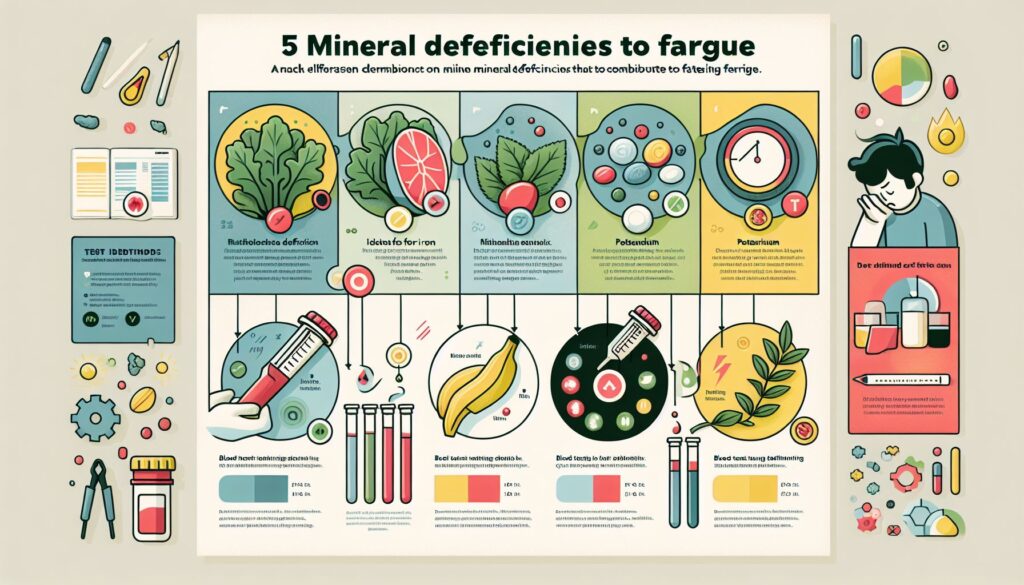
Feeling tired and sluggish can often be attributed to mineral deficiencies. Minerals play a crucial role in the body, and even a slight imbalance can lead to noticeable symptoms like fatigue. Here are five common mineral deficiencies that can cause fatigue, along with how to test for them.
1. Iron Deficiency
Iron is a vital mineral that helps produce hemoglobin, allowing red blood cells to carry oxygen. Without enough iron, the body struggles to get the oxygen it needs, resulting in fatigue.
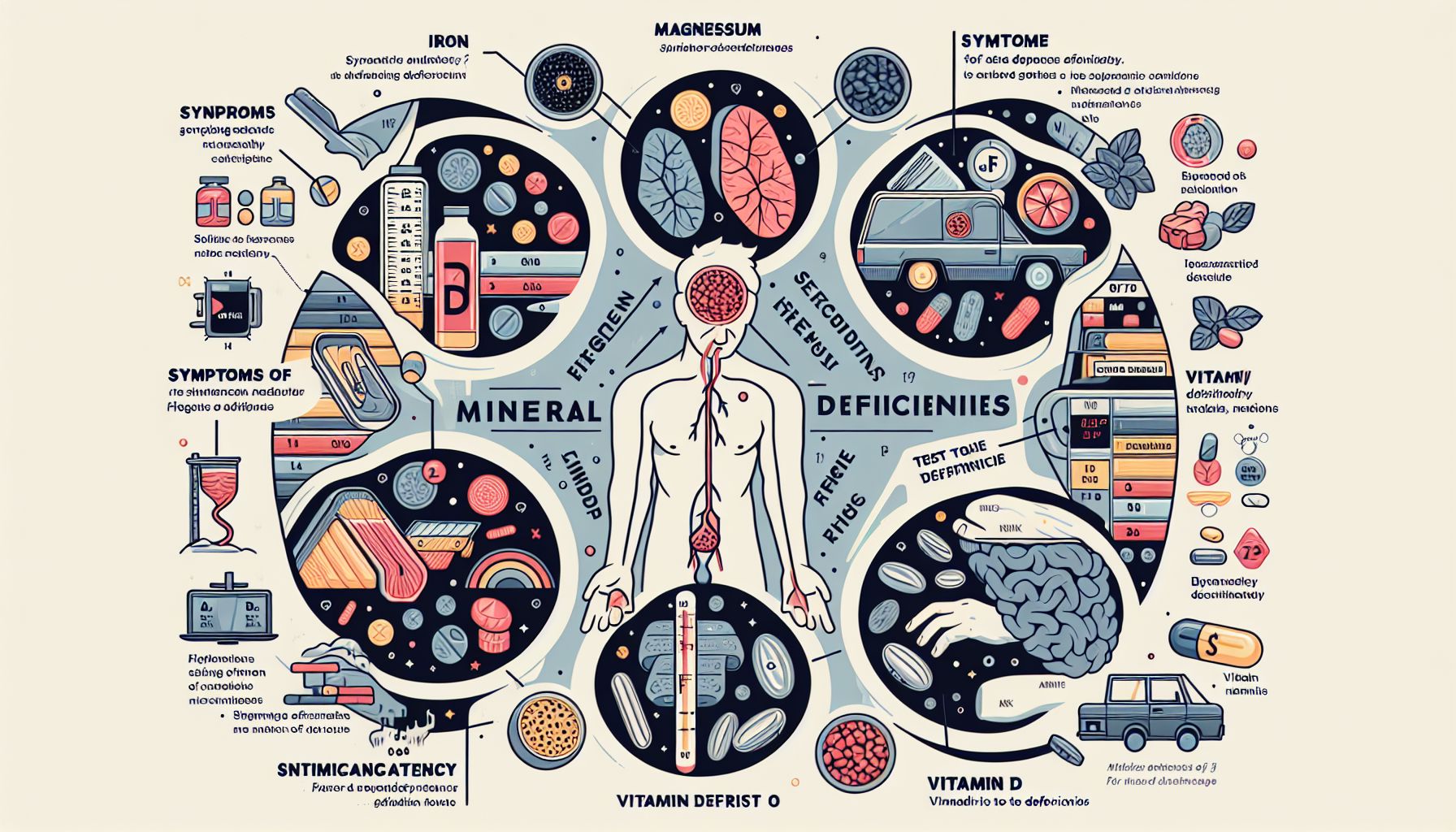
Symptoms of Iron Deficiency
- Tiredness and weakness
- Pale skin
- Shortness of breath
- Headaches
Testing for Iron Deficiency
A simple blood test measures your hemoglobin and ferritin levels. Low levels of these indicate an iron deficiency.
Treating Iron Deficiency
- Increase iron-rich foods like red meat, beans, and spinach.
- Consider iron supplements if dietary adjustments are insufficient.
2. Magnesium Deficiency
Magnesium is essential for muscle and nerve function, blood sugar control, and energy production. A lack of magnesium can lead to fatigue and muscle weakness.
Symptoms of Magnesium Deficiency
- Fatigue
- Muscle cramps and spasms
- Abnormal heart rhythms
Testing for Magnesium Deficiency
Serum magnesium blood tests can help identify a deficiency. However, they might not always reflect true levels, so seek advice from a healthcare provider.
Treating Magnesium Deficiency
- Consume more nuts, seeds, and whole grains.
- Magnesium supplements can provide additional support in severe cases.
3. Zinc Deficiency
Zinc supports immune function and plays a role in cell division and growth. Its absence can result in tiredness and a weakened immune system.
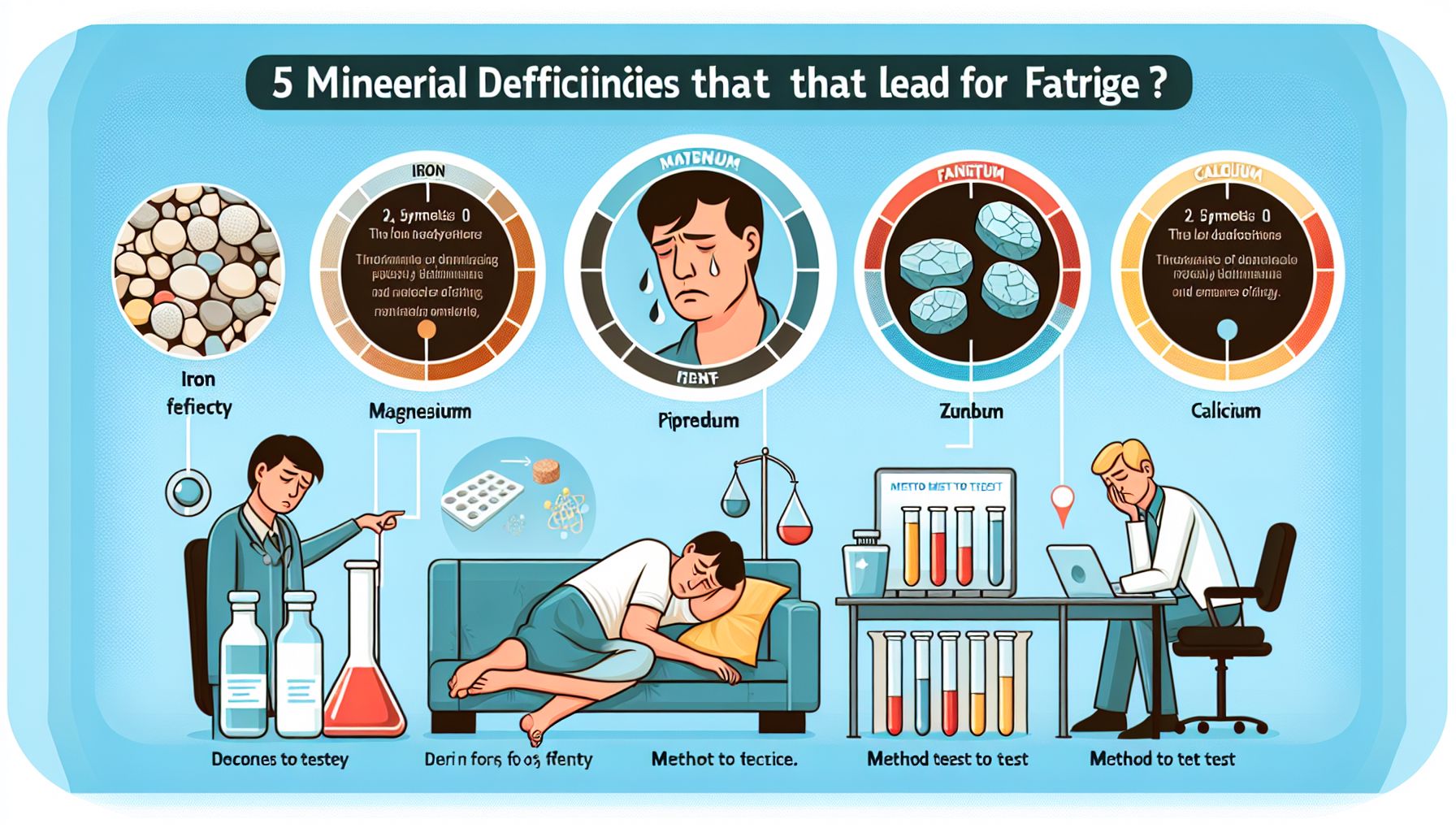
Symptoms of Zinc Deficiency
- Fatigue
- Immune system dysfunction
- Hair loss
Testing for Zinc Deficiency
Zinc levels can be checked through blood, urine, or a hair analysis test.
Treating Zinc Deficiency
- Eat foods rich in zinc such as meat, shellfish, and legumes.
- Consider zinc supplements after consulting with a healthcare provider.
4. Calcium Deficiency
Calcium is primarily known for its role in bone health, but it’s also vital for muscle contraction and nerve signaling. Insufficient calcium can lead to fatigue and muscle weakness.
Symptoms of Calcium Deficiency
- Muscle cramps
- Weakness
- Fatigue
- Dry skin
Testing for Calcium Deficiency
Calcium levels are typically measured through a blood test.
Treating Calcium Deficiency
- Incorporate more dairy products and green leafy vegetables into your diet.
- Calcium supplements may be recommended in severe cases.
5. Potassium Deficiency
Potassium is critical for maintaining fluid balance and proper muscle function. A deficiency in potassium can cause fatigue and muscle cramps.
Symptoms of Potassium Deficiency
- Fatigue
- Muscle cramps
- Constipation
Testing for Potassium Deficiency
Blood tests determine potassium levels and can confirm a deficiency.
Treating Potassium Deficiency
- Increase the intake of bananas, oranges, and potatoes.
- Potassium supplements should be used carefully and only under medical guidance.
Pros and Cons of Mineral Supplementation
Pros
- Improves energy levels and reduces fatigue
- Boosts overall health and bodily function
- Easy and accessible way to address deficiencies
Cons
- Overuse can lead to toxicity
- Supplements may interact with medications
- Some supplements aren’t properly regulated and can vary in quality
Final Thoughts
Mineral deficiencies can significantly impact your energy and wellbeing. Recognizing the symptoms and getting the appropriate tests can help address and correct these deficiencies. By maintaining a balanced diet rich in essential minerals, you can enhance your energy levels and overall health. Consult with a healthcare provider before starting any supplementation to ensure safety and effectiveness.