
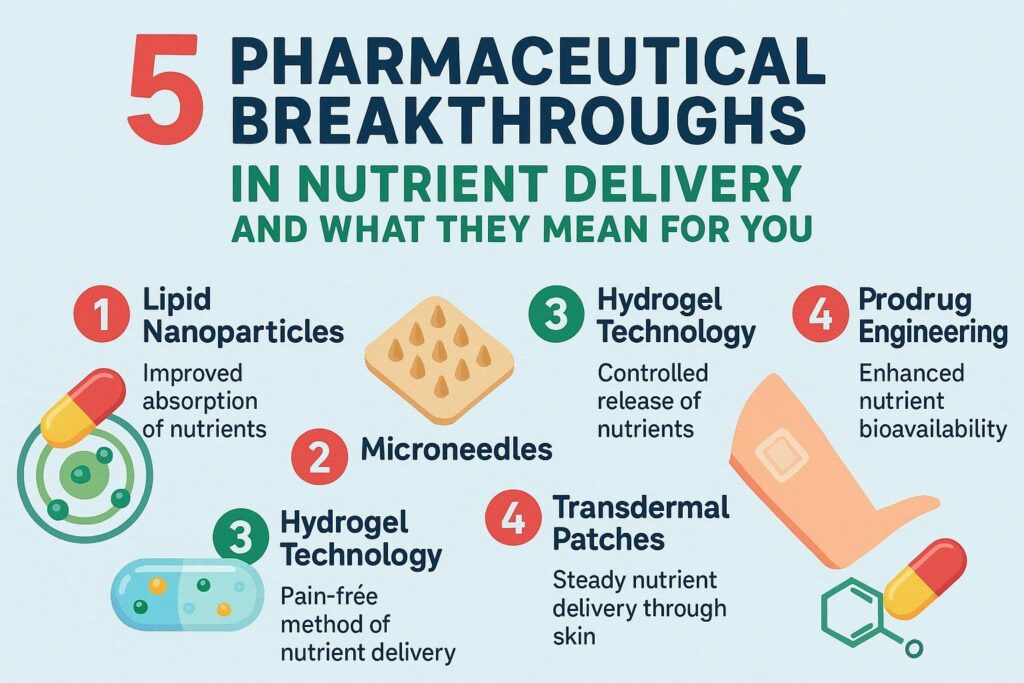
In recent years, the pharmaceutical industry has made significant advancements in nutrient delivery. These breakthroughs promise to improve how we consume essential vitamins and nutrients. This article explores five key developments in this area and their potential benefits for individual health.
Nanoemulsions: Enhancing Absorption Rates
Nanoemulsions stand out in modern nutrient delivery methods. These are tiny droplets that encapsulate nutrients, ensuring they are easily absorbed by the body. Conventional pills or supplements can have absorption issues. Nanoemulsions solve this problem by increasing bioavailability, meaning the body can use more of the nutrients.
What It Means for You:
Nanoemulsions promise more efficient nutrient uptake. You may need smaller doses to achieve desired health outcomes. This method could also reduce side effects since the body processes nutrients more effectively.
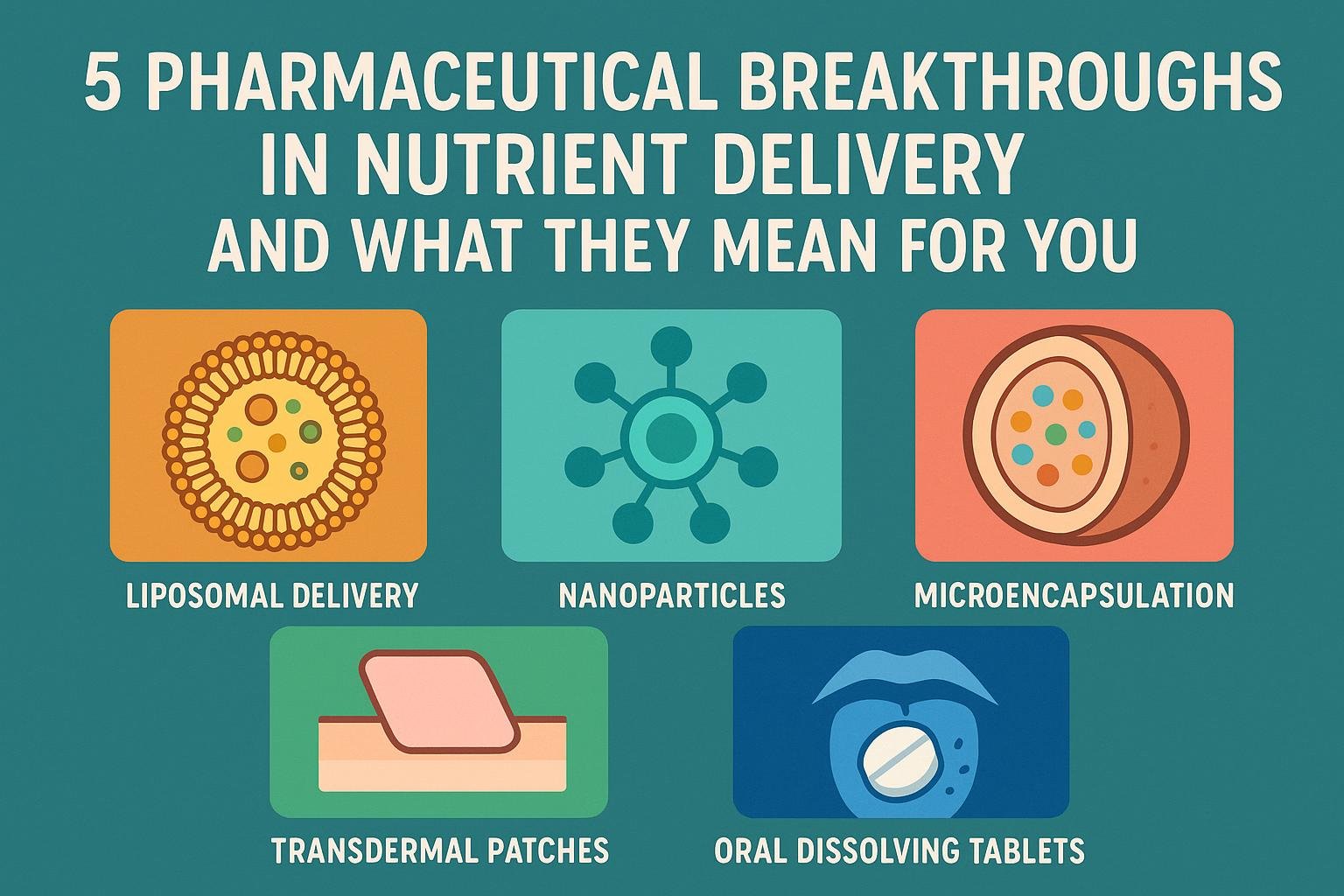
Liposomal Delivery Systems: Protecting Nutrients
Liposomal delivery systems involve nutrients wrapped in tiny fat bubbles, known as liposomes. This method prevents nutrient degradation in the stomach’s acidic environment. Vitamins C and D, as well as some herbal supplements, benefit greatly from this technology.
What It Means for You:
People using liposomal supplements often experience enhanced nutrient stability and better effectiveness. This method is particularly beneficial for individuals who have difficulty absorbing nutrients from their diet or traditional supplements.
Transdermal Patches: Nutrients Through the Skin
Transdermal patches are another groundbreaking technology in nutrient delivery. These patches release nutrients through the skin into the bloodstream. They offer a slow and steady release, maintaining nutrient levels over time.
What It Means for You:
Transdermal patches are convenient and provide an alternative to swallowing pills. This method is perfect for those who dislike taking supplements orally or have digestive issues affecting nutrient absorption.
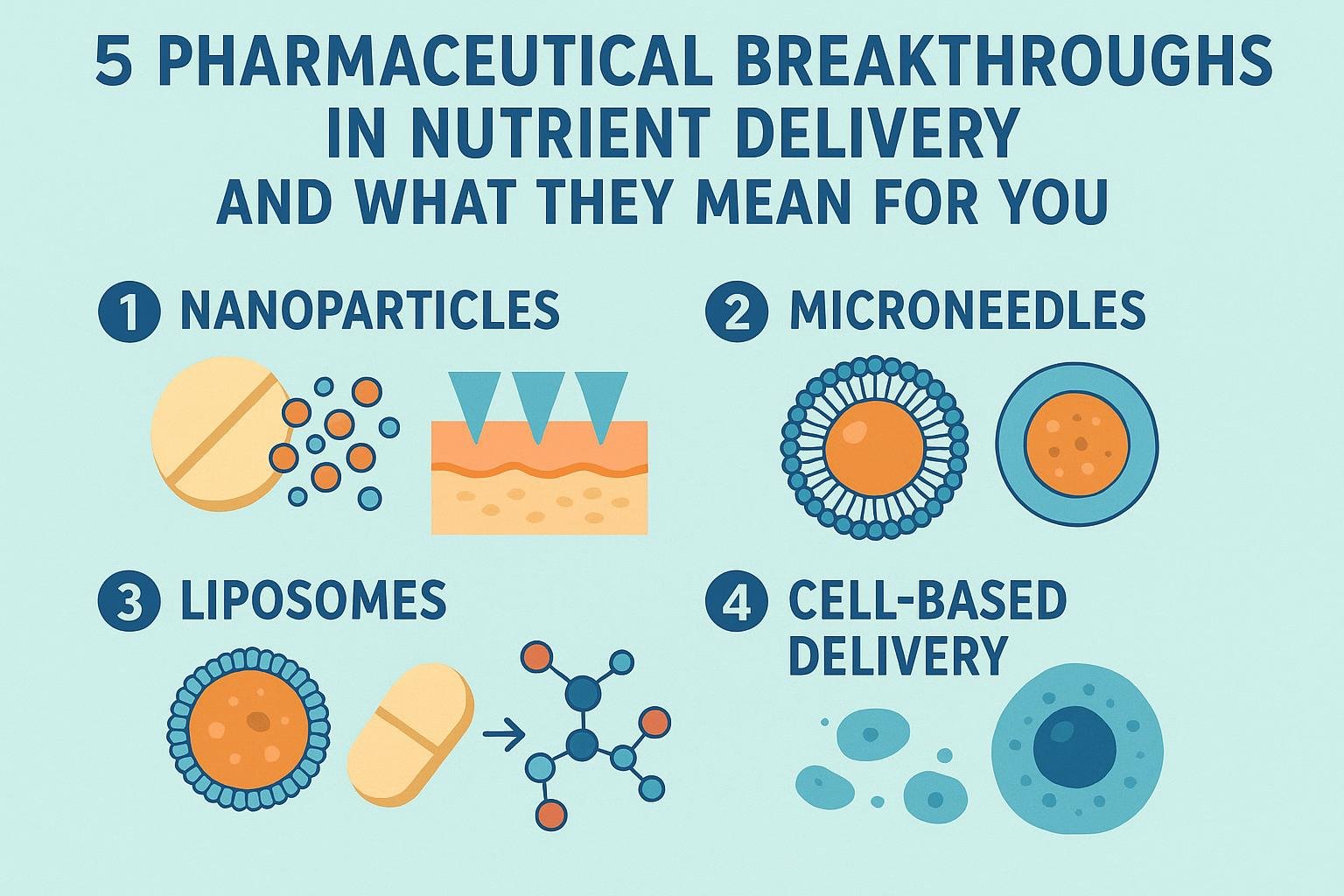
Oral Dissolvable Films: Convenience and Speed
Oral dissolvable films are thin sheets placed on or under the tongue. They dissolve quickly, releasing nutrients directly into the bloodstream through mouth tissues. This bypasses the digestive system and liver, ensuring faster nutrient uptake.
What It Means for You:
These films are ideal for on-the-go nutrient intake. They are discreet, portable, and efficient. If you need a rapid nutrient boost, such as during busy travel or work schedules, these films offer an effective solution.
Microencapsulation: Targeted Delivery
Microencapsulation involves enclosing nutrients in miniature capsules. This technology controls nutrient release, targeting specific parts of the body. Microencapsulation is especially useful for probiotics and antioxidants.
What It Means for You:
Targeted delivery means nutrients can reach areas needing them most, providing localized health benefits. This precision can lead to fewer side effects and more effective treatments for specific health conditions.
Pros and Cons of New Nutrient Delivery Systems
Each system has unique benefits and limitations. Let’s explore these in more detail:
Advantages
- Improved Absorption: New technologies ensure nutrients are more available for the body to use, enhancing health outcomes.
- Convenience: Some systems, like patches and dissolve films, offer people flexibility and ease of use, fitting seamlessly into modern lifestyles.
- Reduced Side Effects: By increasing absorption efficiency, these systems can reduce the risk of experiencing unpleasant or harmful side effects.
Disadvantages
- Cost: Advanced technologies often come at a higher price point. This can make them less accessible for some individuals.
- Availability: Certain delivery systems might not yet be widely available or understood by consumers.
- Complexity: Understanding the best delivery method for an individual’s needs may require professional guidance.
Choosing the Right Method
Each person’s health needs are unique. Choosing the correct nutrient delivery method involves considering personal preferences, health conditions, and lifestyle requirements. Consulting a healthcare professional can help guide these choices, ensuring optimal health benefits.
Conclusion
The future of nutrient delivery in pharmaceuticals is promising. These advancements offer exciting opportunities for personalized and efficient health management. As these technologies become more accessible, individuals can expect improved quality of life and health outcomes through better nutrient utilization.