
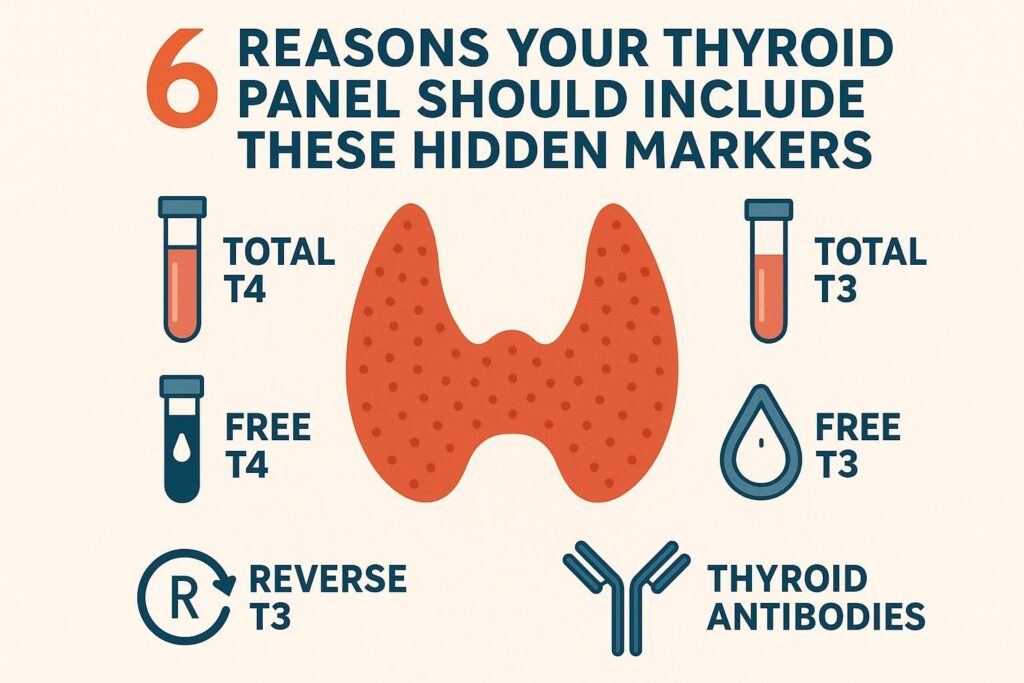
Thyroid health is crucial to overall well-being. The thyroid gland regulates metabolism, energy, and many other body functions. Standard thyroid tests often include TSH, Free T4, and Free T3. However, these markers do not always give a complete picture. Including additional, less common markers can provide a deeper understanding of thyroid health. Here are six reasons why your thyroid panel should include these hidden markers.
1. Detect Subclinical Conditions
TPO and TG Antibodies
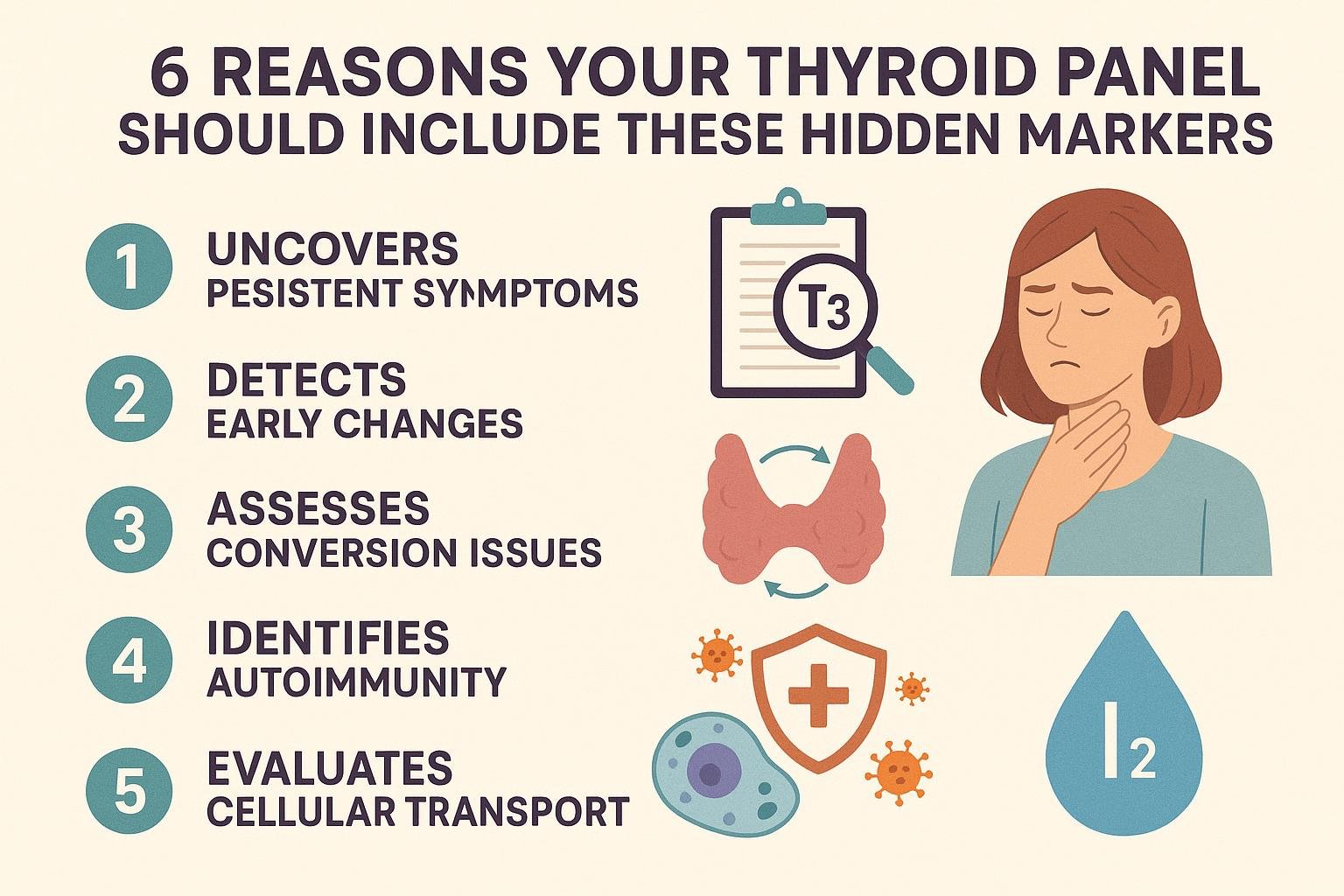
Thyroid Peroxidase (TPO) and Thyroglobulin (TG) antibodies help detect autoimmune thyroid disease, even before symptoms appear. Hashimoto’s thyroiditis, an autoimmune condition, can cause symptoms long before traditional markers indicate abnormalities. TPO and TG antibodies are present in many patients with autoimmune thyroid disease. Detecting these early helps manage and treat conditions more effectively.
Pros and Cons
- Pros: Early detection allows for preventive measures, reducing symptom severity. Monitoring antibody levels can guide treatment adjustments.
- Cons: False positives can occur, and not all individuals with antibodies develop thyroid disease.
2. Identify Thyroid Hormone Conversion Issues
Reverse T3
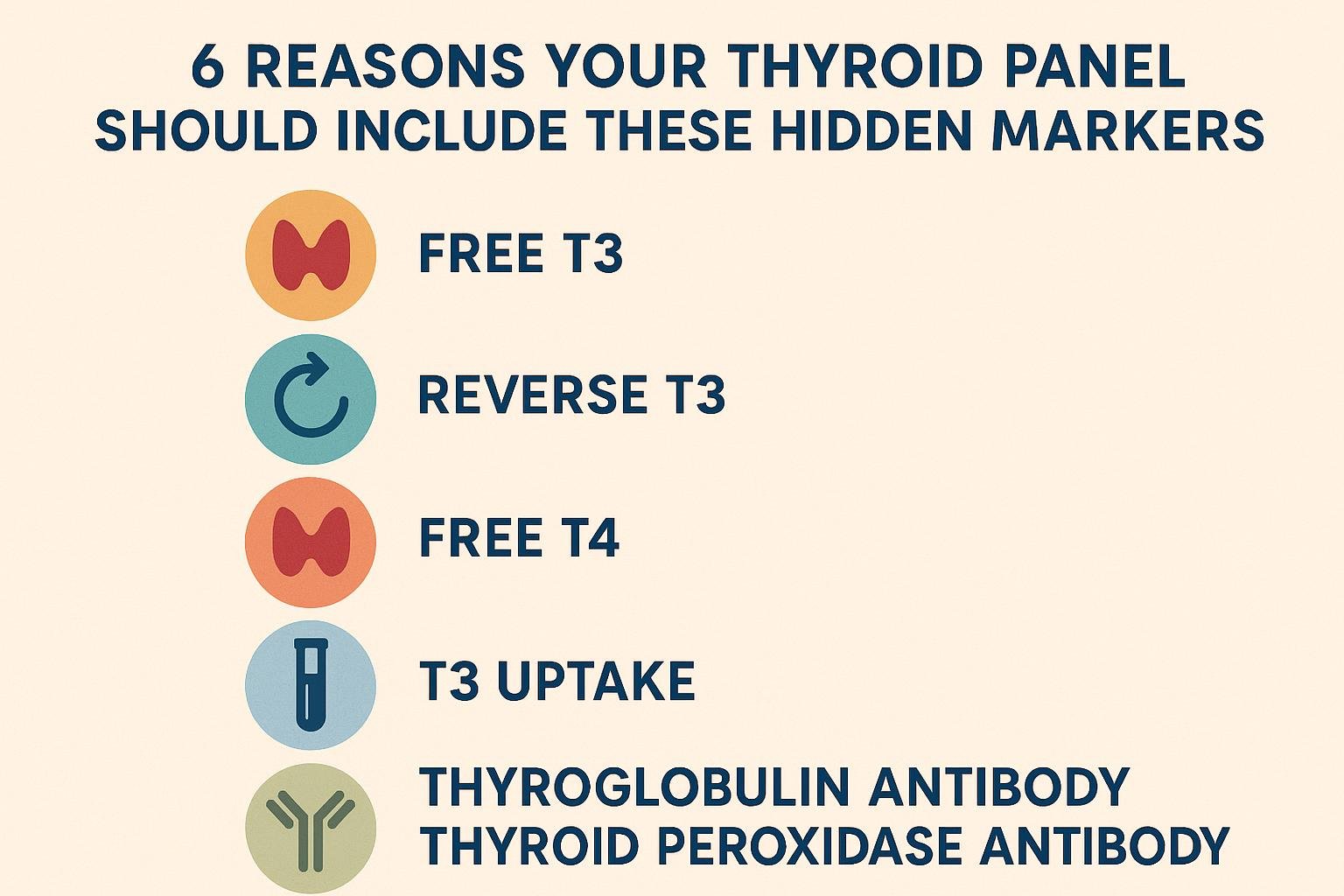
Reverse T3 (rT3) is an inactive form of T3. When the body converts T4 to T3, it also creates some rT3. High rT3 levels can indicate problems with hormone conversion. This can happen during stress or illness. High rT3 levels mean that although T3 levels appear normal, the body may not be using the hormone effectively.
Specific Examples
- Example 1: A patient with normal Free T3 but high rT3 levels experiences fatigue and weight gain.
- Example 2: During illness, high rT3 levels slow down metabolism to conserve energy.
3. Assess Thyroid Binding
Thyroid Binding Globulin (TBG)
TBG carries thyroid hormones through the bloodstream. TBG levels affect the amount of hormone available to cells. If TBG levels are too high or low, it alters the free hormone levels, affecting metabolic activities.
Related Information
- High TBG Levels: Can occur during pregnancy or estrogen therapy, leading to lower free hormone levels.
- Low TBG Levels: Can be seen in liver disease or when using steroids, leading to higher free hormone levels.
4. Evaluate Nutritional Status Impact
Selenium and Iodine
Both selenium and iodine are essential for thyroid hormone production and conversion. Selenium supports enzyme function involved in hormone conversion, while iodine is a key component of thyroid hormones.
Importance
- Selenium Deficiency: Can lead to poor conversion of T4 to T3.
- Iodine Deficiency: Can cause hypothyroidism and goiter.
Regularly assessing these levels ensures nutrient supplementation can be adjusted to support thyroid health.
5. Understand Pituitary Function
TSH Receptor Antibodies
TSH Receptor Antibodies (TRAb) can help evaluate the pituitary gland’s role in thyroid regulation. This is especially important in cases of suspected Graves’ disease. TRAb detection confirms an overactive thyroid due to immune attacks.
Pros and Cons
- Pros: Helps confirm Graves’ disease diagnosis for targeted treatment.
- Cons: Testing may be expensive and not routinely covered by insurance.
6. Comprehensive Risk Assessment
TRH Stimulation Test
The Thyrotropin-Releasing Hormone (TRH) stimulation test evaluates the pituitary gland’s response to low thyroid hormone levels. It helps determine if the pituitary or the thyroid gland itself causes thyroid function issues.
Advantages
- Advantage 1: Detects central hypothyroidism, a less common form where the pituitary gland fails to stimulate the thyroid.
- Advantage 2: Useful in complex cases where standard tests are inconclusive.
Disadvantages
- Disadvantage 1: Involves multiple blood draws, increasing patient discomfort.
- Disadvantage 2: Availability may be limited in standard healthcare settings.
Conclusion
A comprehensive thyroid panel provides a more detailed look at thyroid health. Including hidden markers like TPO and TG antibodies, Reverse T3, TBG, and nutrients like selenium and iodine enhances diagnostic accuracy. Evaluating TSH receptor antibodies and using the TRH stimulation test can provide further insights into thyroid and pituitary function. While these tests might require additional resources, they facilitate better management and treatment of thyroid conditions. Keeping your thyroid panel comprehensive can vastly improve health outcomes.