
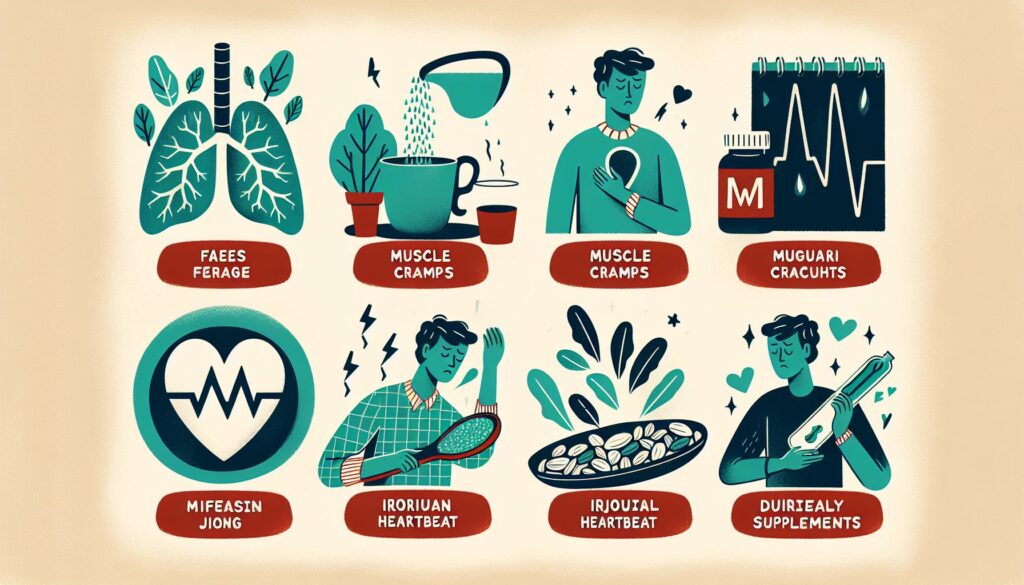
Magnesium is an essential mineral that supports many functions in the body. It helps with nerve and muscle function, boosts the immune system, and keeps the heart stable. Recognizing when your body lacks magnesium is crucial for maintaining health. Below are six signs of magnesium deficiency and quick ways to boost your magnesium levels.
Sign 1: Muscle Cramps and Spasms
Muscle cramps and spasms are often due to a lack of magnesium. This mineral helps relax muscles. When magnesium is low, muscles contract involuntarily.
How to Fix It Fast
- Eat Magnesium-Rich Foods: Include foods like spinach, almonds, and avocado in your diet.
- Magnesium Supplements: Use supplements for a quick magnesium boost. Consult with a healthcare provider for dosage.
Sign 2: Fatigue and Weakness
Low energy levels and muscle weakness can indicate a magnesium shortage. Magnesium plays a role in energy production and muscle health.
How to Fix It Fast
- Drink a Magnesium Supplement: A powdered form of magnesium can improve energy levels.
- Whole Grains and Nuts: These foods provide energy and increase magnesium intake.
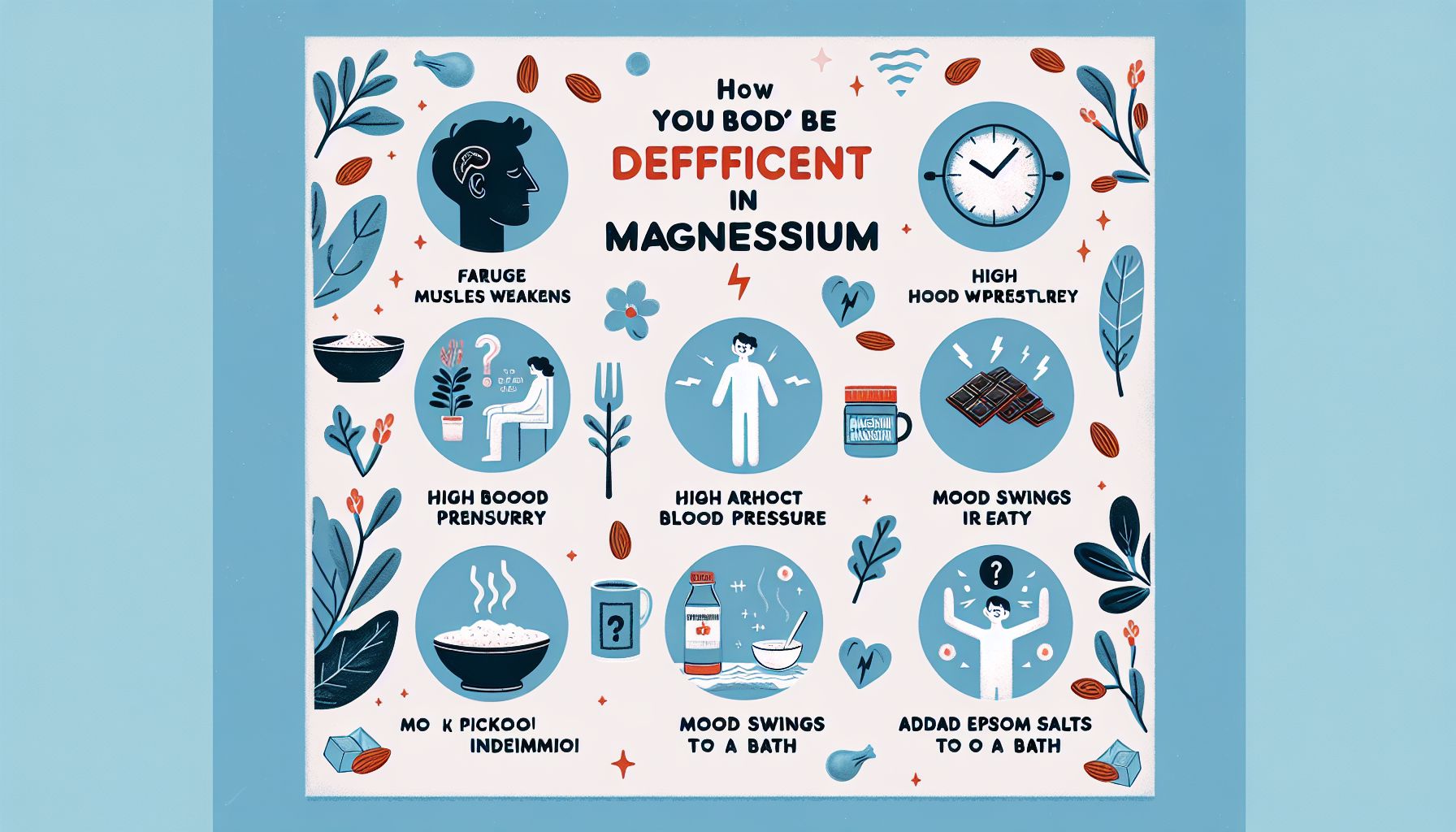
Sign 3: Irregular Heartbeat
An irregular heartbeat, or arrhythmia, is a concerning sign of low magnesium. This condition can affect overall heart health.
How to Fix It Fast
- Increase Magnesium Intake: Consume green leafy vegetables and seeds.
- Hydration: Staying well-hydrated supports magnesium function in the heart.
Sign 4: Tingling and Numbness
Magnesium deficiency can lead to neurological symptoms like tingling and numbness. This occurs when nerves do not function properly.
How to Fix It Fast
- Dietary Changes: Introduce fish and nuts to help nerve function.
- Topical Magnesium: Use magnesium lotions or oils for muscle soreness and nerve issues.
Sign 5: Migraines
Migraines and headaches can worsen with low magnesium. Magnesium regulates neurotransmitter release and blood vessel dilation, impacting headache frequency and severity.
How to Fix It Fast
- Dietary Magnesium: Focus on magnesium-rich vegetables and whole grains.
- Relaxation Practices: Stress management techniques can improve symptoms.
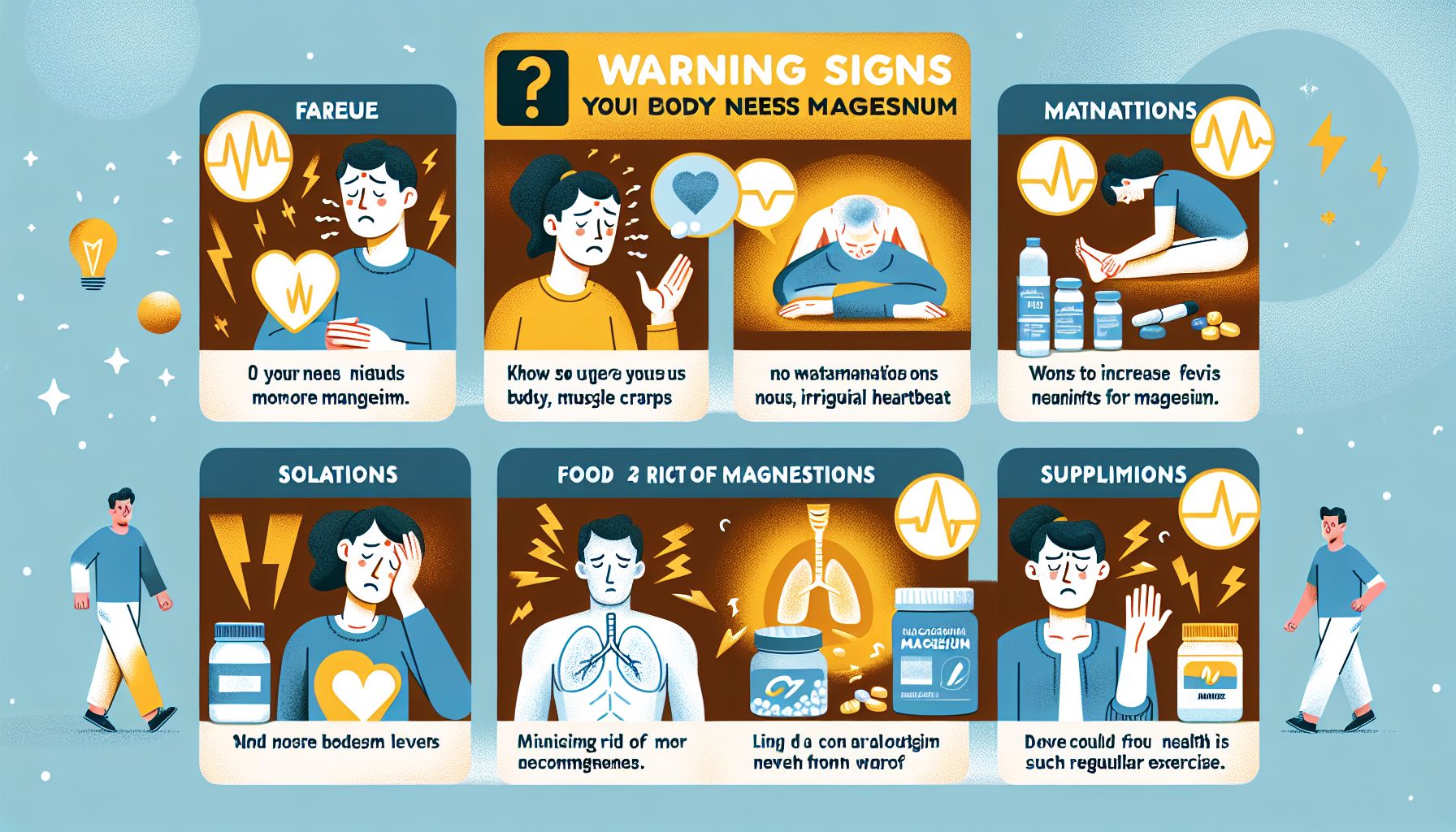
Sign 6: Changes in Mood
Mood changes, including anxiety and depression, link to magnesium deficiency. Magnesium affects neurotransmitters that regulate mood.
How to Fix It Fast
- Increase Whole Foods: Banana and yogurt are good sources of magnesium and help with mood stabilization.
- Magnesium Citrate or Glycinate: These supplement forms are effective and absorb well.
Pros and Cons of Magnesium Supplements
Pros
- Quick Relief: Supplements can quickly improve magnesium levels.
- Convenient: Easy to find and incorporate into a daily routine.
Cons
- Overuse Risks: Too much magnesium can cause diarrhea and stomach cramps.
- Interactions: Magnesium might interact with medications like antibiotics.
Optimal Magnesium-Rich Foods
Nuts and Seeds
- Almonds, cashews, and pumpkin seeds are excellent sources.
Green Vegetables
- Spinach, kale, and Swiss chard offer high magnesium content.
Whole Grains
- Brown rice and oats provide magnesium and fiber.
Fish
- Mackerel and tuna are rich in magnesium and omega-3 fatty acids.
Conclusion
Recognizing and addressing magnesium deficiency quickly can prevent serious health problems. Integrating magnesium-rich foods and supplements into your diet is effective for maintaining adequate levels. Always consult with a healthcare provider before starting supplements, especially if you have underlying health conditions or are on medication. Implementing these strategies can help you achieve better energy, mood, and overall wellness.