

Vitamin B12 is crucial for health. It helps with blood formation, nerve function, and brain health. A B12 deficiency can lead to serious health problems. Testing for B12 levels is important, but sometimes the results can be misleading. Here, we explore six things to know about B12 testing and why false normals happen.

1. Understanding B12 Testing Methods
Doctors use blood tests to measure B12 levels. These tests usually measure the concentration of B12 in serum or plasma. There are two common tests: the serum B12 test and the active B12 test.
-
Serum B12 Test: This is the most common test. It measures the total amount of B12 in your blood. However, not all B12 in the blood is active. Some is bound to proteins that do not support its function.
-
Active B12 Test: This test checks the level of active B12, which your body can use. This test can provide more accurate information about B12 availability.
Pros and Cons
- Serum B12 Test: Widely available and less costly, but less precise.
- Active B12 Test: More precise in some cases, more expensive and less available.
2. Significance of B12 Range Standards
Different labs have different normal ranges for B12 levels. The standard range can vary from 200 to 900 pg/mL. Some labs set the low end of normal at 200 pg/mL, while others use 300 pg/mL. A reading in the low normal range can indicate a deficiency in some cases. Doctors should consider symptoms alongside test results.
Example Scenario
A patient with a B12 level of 250 pg/mL shows symptoms of deficiency. The test suggests a normal range, but the symptoms indicate an issue. Physicians need to evaluate symptoms and might consider further testing despite the normal range.
3. Factors Leading to False Normal B12 Levels
Certain factors can cause false normal results. An accurate interpretation of test results depends on understanding these variables:
- High Folate Levels: High levels of folate can mask B12 deficiency. B12 levels appear normal, but deficiency symptoms persist.
- Recent B12 Supplementation: Taking B12 supplements before the test can increase B12 levels temporarily. It might show a false normal result if supplements were taken shortly before testing.
- Genetic Factors: Some genetic mutations affect B12 metabolism. People with these mutations may show normal B12 levels but still experience deficiency symptoms.
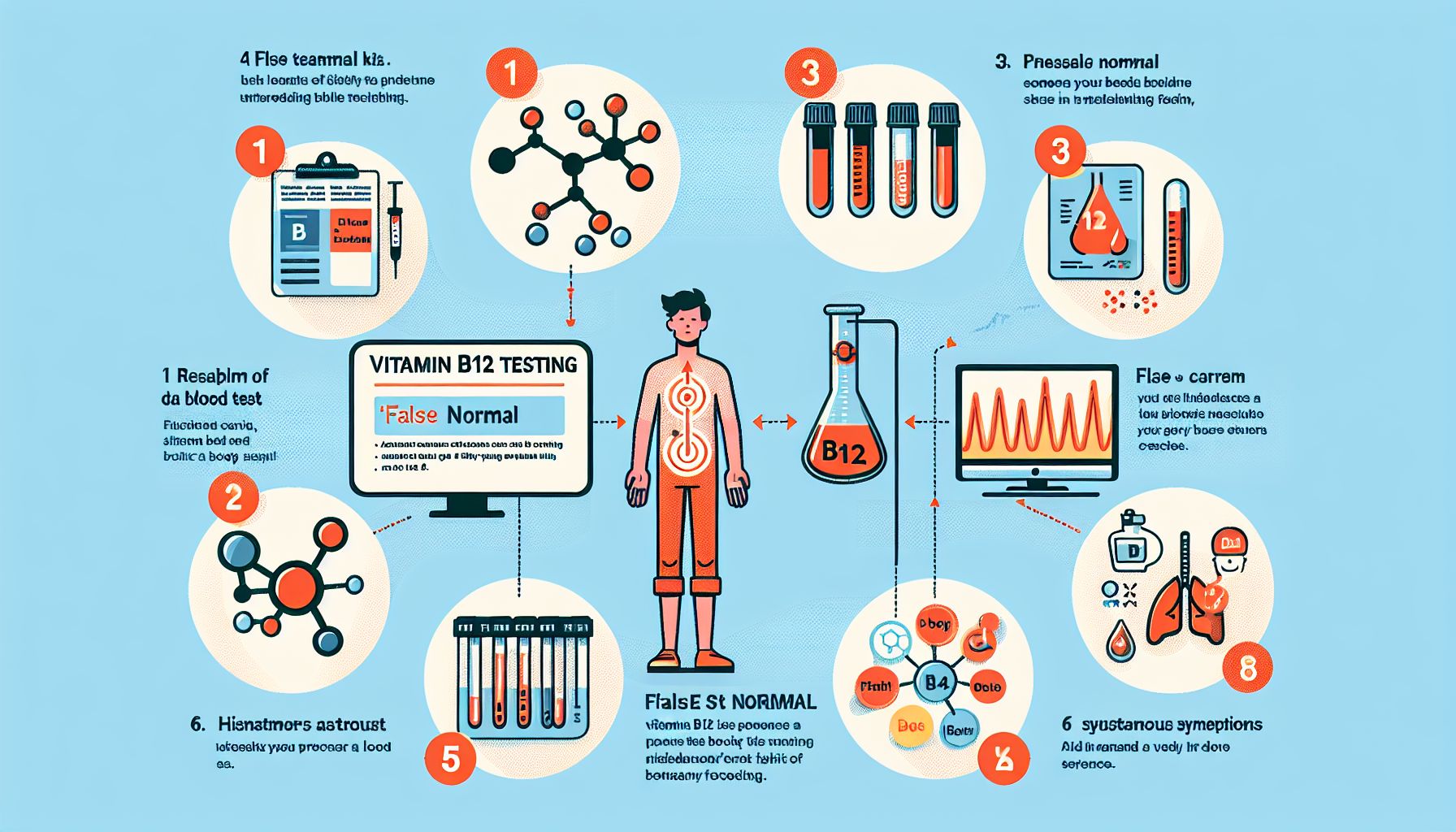
4. Importance of Symptom Evaluation
Symptoms play a crucial role in diagnosing B12 deficiency. Test results are important, but the patient’s symptoms provide direct hints at a potential deficiency. Common symptoms include:
- Fatigue
- Weakness
- Memory problems
- Tingling in hands and feet
Missing symptoms during diagnosis can lead to incorrect interpretation of blood test results.
5. Additional Testing Options
In some cases, doctors may order additional tests to confirm a B12 deficiency. These tests help provide a more comprehensive picture:
- Methylmalonic Acid (MMA) Test: An elevated MMA level suggests a B12 deficiency, even if B12 blood levels are normal.
- Homocysteine Test: High homocysteine levels may indicate a B12 deficiency.
Testing Pros and Cons
- MMA Test: Good for detecting early deficiency but costly.
- Homocysteine Test: Provides insight into B12 status and heart disease risk but is not specific.
6. Long-term Implications of Incorrect B12 Measurement
Ignoring B12 deficiency or interpreting results incorrectly can have severe implications. Long-term untreated deficiency can lead to nerve damage, cognitive issues, and anemia. Early detection and treatment are essential for preserving health.
Preventive Measures
Regular check-ups and symptom awareness are crucial. If symptoms persist, doctors should consider revisiting B12 testing or exploring alternative testing methods. Education about diet and B12-rich foods is important for prevention.
Conclusion
Understanding B12 testing and why false normals happen is important for accurate diagnosis. Testing isn’t always straightforward, and several factors can influence results. Being aware of symptoms and secondary testing options can help. Proper diagnosis ensures the timely treatment of B12 deficiency, ultimately protecting long-term health.