
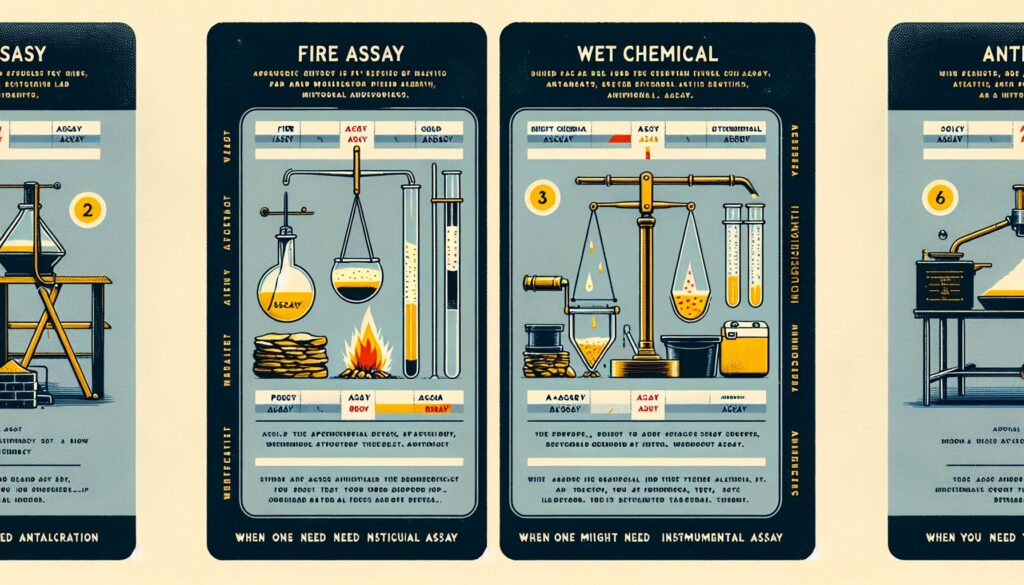
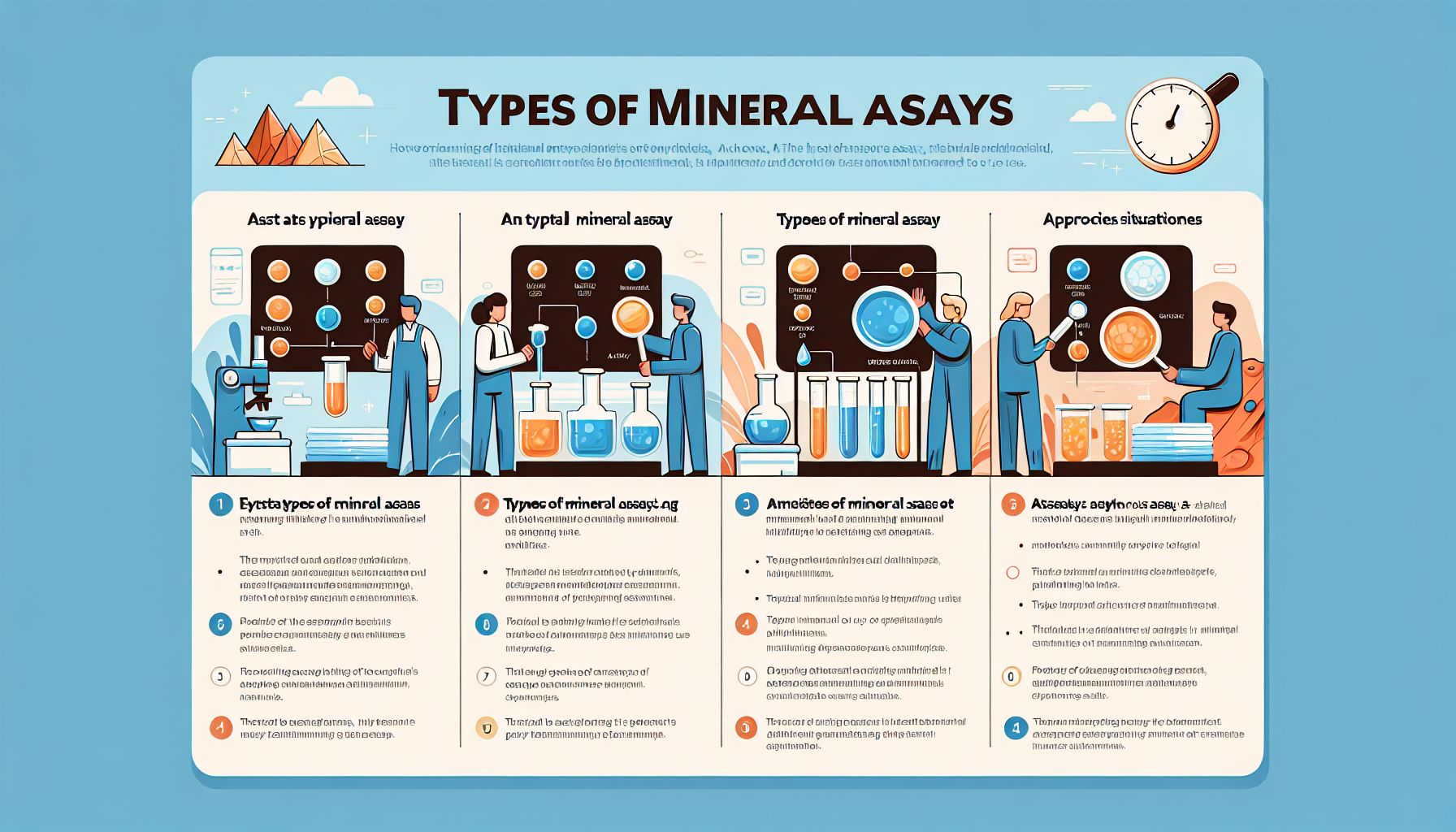
In mineral exploration and mining, knowing the value of minerals in an ore is crucial. Mineral assays provide an objective measure of metal content and grade. Different types of assays offer different insights. This article explores three common types of mineral assays: fire assay, atomic absorption spectroscopy (AAS), and inductively coupled plasma (ICP) analysis. We will also look at when you might need each one.
1. Fire Assay
The fire assay is a traditional method used for measuring precious metals like gold, silver, and platinum. It involves several steps: sampling, fluxing, smelting, cupellation, and chemical analysis. This assay is known for its accuracy in detecting trace amounts of precious metals.
Advantages of Fire Assay
- Accuracy: Fire assays provide precise measurements, making them a standard for precious metals.
- Consistency: Repeated tests yield similar results.
- Long-standing method: The process has been in practice for hundreds of years, proving its reliability.
Disadvantages of Fire Assay
- Time-Consuming: The process takes longer compared to modern methods.
- Skill Requirement: Requires skilled technicians to ensure accurate results.
- Limited Metal Range: Best suited for gold, silver, and platinum, not ideal for lesser-value or non-precious metals.
When You Need Fire Assay
Use fire assays when working on projects that involve gold or silver. If accuracy is pivotal, this method shines, especially in final evaluations or when high precision is necessary.
2. Atomic Absorption Spectroscopy (AAS)
Atomic absorption spectroscopy is used to detect metals in liquid samples. The method involves atomizing the sample and measuring the light absorption to determine concentration. It’s an excellent method for elements like copper, zinc, and lead.
Advantages of AAS
- Sensitivity: Detects low concentrations of metals efficiently.
- Broad Application: Suitable for analyzing multiple types of metals beyond precious ones.
- Quick Turnaround: Faster than fire assay, offering near-instant results.
Disadvantages of AAS
- Less Suitable for Solids: Requires liquid samples, limiting its use on solid ores.
- Interference: Other substances in the sample might cause interference.
- Regular Calibration: Needs frequent calibration and maintenance to ensure precision.
When You Need AAS
AAS works well when a project involves a variety of metals, particularly base metals. It’s advantageous when analyzing multiple samples quickly, such as in exploratory phases.
3. Inductively Coupled Plasma (ICP) Analysis
ICP analysis is an advanced and versatile method for structural and chemical analysis. It involves using plasma to excite atoms and ions to detect elements. It can analyze numerous elements simultaneously, assessing metals and other types of samples.
Advantages of ICP
- Wide Element Range: Measures nearly all periodic table elements efficiently.
- Multi-Element Capacity: Can analyze multiple elements simultaneously.
- High Throughput: Allows processing of many samples in a short time.
Disadvantages of ICP
- Cost: Expensive equipment and operational costs.
- Complexity: Requires trained personnel and regular maintenance.
- Matrix Effects: The accuracy can be influenced by the chemical nature of the sample matrix.
When You Need ICP
Consider ICP for a comprehensive analysis involving multiple elements. It’s ideal for high-volume sample processing and when considering the broader geochemical landscape of a mining area.
Choosing the Right Assay Method
Project Scope
The project’s scope helps determine the appropriate assay. Precious metal evaluation updates may demand fire assays, while quick base metal checks can benefit from AAS or ICP.
Budget Considerations
Fire assays might be less costly in terms of equipment but require skilled labor. AAS and ICP entail significant initial investments but provide faster and broader analytical capabilities.
Time Frame
If speed is critical, AAS and ICP offer quicker results than fire assay. Consider project deadlines and choose accordingly.
Sample Type
Liquid samples are better suited for AAS and ICP. For solid ores containing precious metals, fire assays may prove more effective.
Conclusion
In mineral exploration and mining, choosing the correct assay method maximizes efficiency and resource management. Fire assay, AAS, and ICP each provide distinct advantages depending on the project needs. Fire assays prioritize precious metal accuracy, AAS offers quick analysis for multiple metals, and ICP provides a broad, comprehensive analysis. Understand the specific requirements of your project to choose the right assay and optimize the exploration or mining process effectively.