
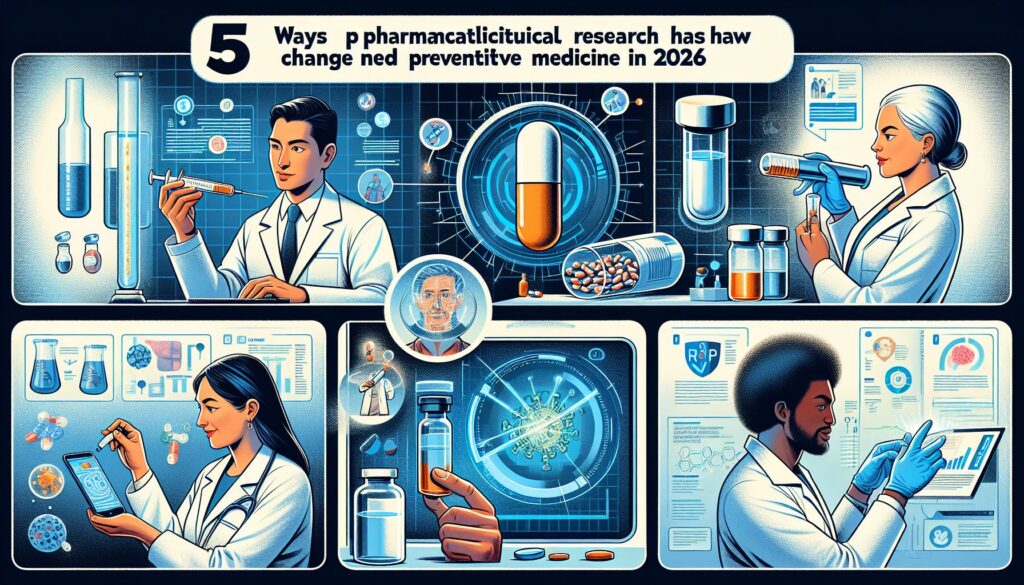
The landscape of preventive medicine has transformed significantly by 2026. Pharmaceutical research has played a crucial role in this evolution, introducing new strategies and innovations. This article explores five ways pharmaceutical research has changed preventive medicine, making it more efficient and personalized.
1. Personalized Medicine
Pharmaceutical research has enabled the personalization of preventive strategies. Scientists now analyze genetic profiles to design personalized care plans. This approach improves treatment precision and effectiveness.
For example, researchers can identify genetic markers related to heart disease. They use these markers to develop specific prevention plans. This shift from a one-size-fits-all to a personalized approach has reduced health risks and improved outcomes.
Advantages
- Higher effectiveness in prevention.
- Reduced risk of adverse effects.
- Optimized treatment plans based on genetic data.

Disadvantages
- High initial cost for genetic testing.
- Privacy concerns regarding genetic data.
2. Improved Vaccines
By 2026, vaccine development has advanced dramatically. Pharmaceutical research has yielded new vaccines that prevent a wider range of diseases. Advances in mRNA technology have accelerated the creation of vaccines for conditions like influenza and malaria.
This novel approach allows faster response to emerging health threats. Additionally, vaccines provide longer-lasting immunity, requiring less frequent boosters.
Advantages
- Broader protection against various diseases.
- Faster production of new vaccines.
- Enhanced public health security.

Disadvantages
- Vaccine hesitancy remains a challenge.
- Distribution in low-income areas can be difficult.
3. Predictive Analytics
Predictive analytics is a groundbreaking tool in preventive medicine. Pharmaceutical research has integrated data science and health care. Experts now analyze large-scale health data to predict disease trends and prevent outbreaks.
Predictive analytics identifies high-risk groups and informs proactive prevention strategies. This precision helps allocate resources efficiently and improve population health management.
Advantages
- Early identification of health risks.
- Efficient use of healthcare resources.
- Prevention of disease outbreaks.
Disadvantages
- Possible data privacy breaches.
- Need for continuous data updates and analysis.
4. Drug Development for Prevention
Traditionally, drugs focused on treatment rather than prevention. Research now focuses on creating medications that prevent conditions. These drugs target risk factors before they develop into diseases.
For instance, statins prevent cardiovascular diseases by managing cholesterol levels. This proactive approach reduces disease incidence and long-term healthcare costs.
Advantages
- Reduces incidence of chronic diseases.
- Lowers overall healthcare expenditure.
- Improves quality of life by preventing complications.
Disadvantages
- Requires long-term adherence to medication.
- Potential for side effects and resistance.
5. Enhanced Monitoring Technologies
Pharmaceutical research has driven innovation in health monitoring technologies. Wearables and implantable devices now track vital signs and health metrics. These technologies provide real-time data to patients and healthcare providers.
Continuous monitoring helps detect early signs of health issues, allowing timely intervention. Patients can adjust their lifestyles based on accurate health data, effectively preventing diseases.
Advantages
- Real-time health data tracking.
- Early detection of potential health problems.
- Empowerment of patients to manage their health.
Disadvantages
- Device reliability and accuracy concerns.
- Data management and privacy issues.
Conclusion
Pharmaceutical research continues to shape preventive medicine. Personalization, improved vaccines, predictive analytics, preventive drugs, and monitoring technologies have revolutionized health care. These innovations provide efficient solutions to current health challenges, promising a healthier future. As research progresses, preventive medicine will become increasingly effective in combating global health issues.