
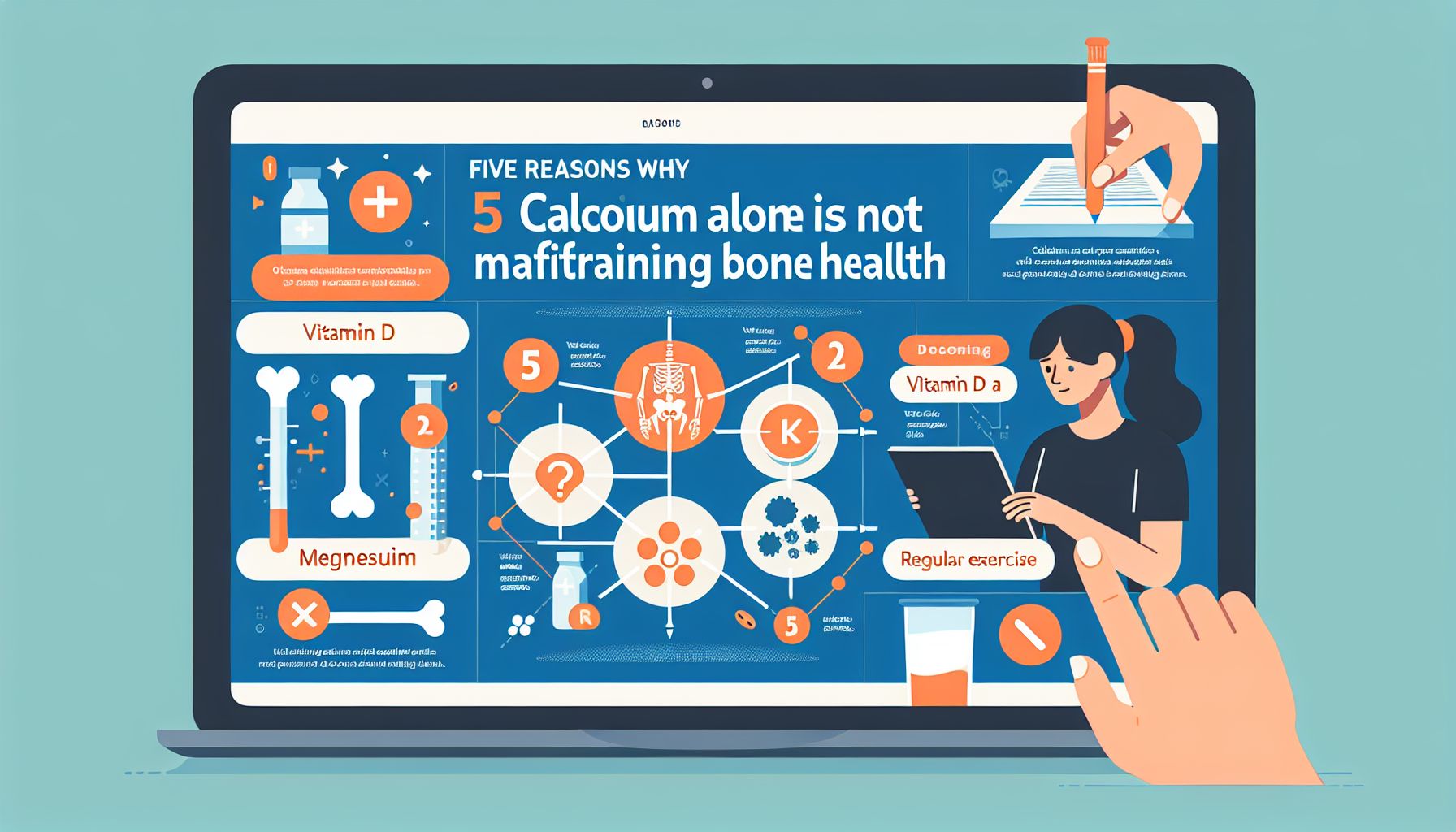
Proper bone health requires more than just calcium intake. While calcium is a vital nutrient for bones, relying solely on it can lead to deficiencies. Building strong bones involves a combination of nutrients and lifestyle choices. In this article, we will explore five reasons why calcium alone is insufficient for bone health and what you need to ensure strong and healthy bones.
1. The Role of Vitamin D
Vitamin D is crucial for calcium absorption. Without vitamin D, your body cannot adequately absorb calcium from the diet, leading to weakened bones. Your skin produces vitamin D when exposed to sunlight. Alternatively, foods such as fatty fish and fortified milk can supply vitamin D.
Why Vitamin D matters:
- Enhances calcium absorption: Vitamin D facilitates the movement of calcium from the intestines into the bloodstream.
- Supports bone formation: It helps in the mineralization of bone tissue, making bones strong.
How to get Vitamin D:
- Spend 15-20 minutes in direct sunlight each day.
- Eat vitamin D-rich foods like salmon and mackerel.
- Consider supplements if necessary.
2. The Importance of Magnesium
Magnesium works alongside calcium. This mineral helps regulate calcium levels in bones and the body. It also activates enzymes involved in bone formation.
Importance of Magnesium:
- Calcium utilization: Magnesium converts vitamin D into its active form, enhancing calcium absorption.
- Bone structure: It contributes to the physical structure of bones.
Sources of Magnesium:
- Green leafy vegetables like spinach
- Nuts and seeds
- Whole grains
3. The Need for Vitamin K
Vitamin K plays a significant role in bone health. It modifies osteocalcin, a protein that helps the bone mineral matrix bind with calcium.
Benefits of Vitamin K:
- Bone strength: It enhances bone mineral density by assisting mineralization processes.
- Fracture risk reduction: Adequate vitamin K levels lower the risk of fractures.
Sources of Vitamin K:
- Green leafy vegetables such as kale and broccoli
- Fermented foods like natto
- Some fruits like figs
4. The Benefits of Regular Exercise

Exercise is essential for maintaining bone strength. Weight-bearing exercises, in particular, stimulate bone tissue growth, increasing bone mass and density.
Types of beneficial exercises:
- Aerobic activities: Running and walking are effective for bone strength.
- Resistance training: Lifting weights helps build muscle and bone mass.
- Balance exercises: Yoga and tai chi improve coordination, reducing fall risk.
Exercise advantages:
- Enhances bone density
- Increases muscle strength
- Reduces the risk of osteoporosis
5. Protein’s Role in Bone Health
Proteins are building blocks for all bodily tissues, including bones. They help form bones’ structural matrix, providing support and strength.
Why Protein is Necessary:
- Bone matrix formation: Collagen proteins provide a scaffolding for bone mineralization.
- Calcium retention: Adequate protein intake facilitates calcium absorption and retention.
Good Protein Sources:
- Lean meats like chicken and fish
- Legumes and beans
- Dairy products such as milk and cheese
Conclusion
Relying solely on calcium for bone health is insufficient. A balanced approach combining various nutrients and lifestyle changes is essential for maintaining strong bones. Incorporating vitamin D, magnesium, vitamin K, regular exercise, and protein into your daily routine ensures your bones remain healthy and robust. Embrace these elements for a comprehensive approach to bone health, providing a strong foundation for your body’s well-being throughout life.