

Understanding your liver health is crucial for overall well-being. When we consider the complex functions our liver performs—detoxifying harmful substances, producing vital proteins, and aiding digestion—it’s clear why maintaining its health is paramount. Many people experience vague symptoms or simply want to proactively monitor their health, leading them to ask about specific diagnostic tools.
That’s where liver function tests (LFTs) come in. These blood tests measure certain enzymes and proteins in your blood that can indicate liver damage or disease. They offer clear, reliable insights into how well your liver is working. If you’re looking for detailed information on these tests, or perhaps considering proactive health screening, you’ll find comprehensive information about our approach to health analysis at our services page.
At Daydream Health Lab, we’re dedicated to bringing you in-depth research, precise analysis, and actionable insights that help you make smarter health decisions. Our commitment to scientific integrity ensures that the information we provide about LFTs, including AST, ALT, bilirubin, and albumin, is always research-backed and dependable.
What Are Liver Function Tests (LFTs)? A Foundation
Liver function tests are a group of blood tests that measure specific enzymes and proteins in your blood. These markers provide crucial information about the health and function of your liver, helping to detect damage, inflammation, or disease. We use validated methods to analyze these markers, offering a clear picture of your liver’s current state.
Key Markers Explained
- Alanine Aminotransferase (ALT): This enzyme is found primarily in the liver. When liver cells are damaged, ALT leaks into the bloodstream, making it a highly specific indicator of liver injury. Elevated ALT levels often signal liver inflammation or damage.
- Aspartate Aminotransferase (AST): While AST is also found in the liver, it’s present in other organs like the heart, muscles, and kidneys. Therefore, elevated AST levels alone aren’t as specific for liver damage as ALT. However, when both are high, it strongly suggests liver involvement.
- Bilirubin: A yellowish pigment, bilirubin is a byproduct of red blood cell breakdown. The liver processes bilirubin, removing it from the body. High levels of bilirubin in the blood (hyperbilirubinemia) can indicate impaired liver function, bile duct obstruction, or excessive red blood cell destruction.
- Albumin: This is a major protein produced by the liver. Albumin plays a vital role in maintaining fluid balance and transporting substances in the blood. Low albumin levels can point to chronic liver disease, as a damaged liver may not produce enough of it.
As the Mayo Clinic explains, “Liver function tests are blood tests that measure different enzymes, proteins, and other substances made by the liver. These tests can help check on the overall health of your liver.” Our 20-member expert staff utilizes these and other precise analyses to give you a detailed understanding of your health. Margaret Anderson, our Head of Laboratory, ensures every test adheres to documented quality control workflows.
How Do Liver Function Tests Work?
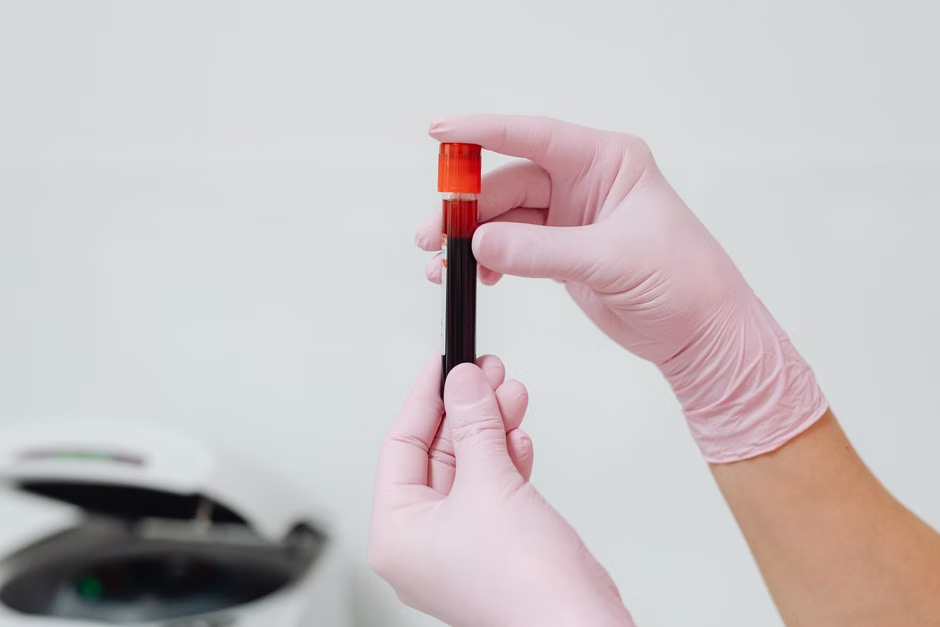
The process for LFTs is straightforward. A healthcare professional draws a small sample of blood, typically from a vein in your arm. This sample is then sent to our modern laboratory facilities where our senior pathologist, Mark Anthony, oversees its analysis. We use calibrated instruments and statistical software to measure the levels of ALT, AST, bilirubin, and albumin, among other markers.
Our goal remains the same—offer dependable, easy-to-understand knowledge backed by solid research. The results of these tests provide clear, reliable insights into your liver’s health, allowing for early detection of potential issues. This proactive approach is fundamental to preventive health screening, a core focus at Daydream Health Lab.

What Does High Albumin, ALT, and AST Mean?
When ALT and AST levels are elevated, it primarily indicates liver cell damage or inflammation. If albumin levels are also high, this is less common but can sometimes point to dehydration, or in rare cases, issues like multiple myeloma. High ALT and AST together are strong signals for the need for further investigation into liver health.
Typically, elevated ALT and AST signify that liver cells are injured and releasing these enzymes into the bloodstream. Conditions like viral hepatitis, alcohol-related liver disease, non-alcoholic fatty liver disease (NAFLD), or even certain medications can cause these enzymes to rise. If albumin is also high, this might not directly relate to liver damage but could be a sign of the body’s fluid balance being off. We always look at the full panel of results, along with your clinical history, for a complete picture.
“Elevated liver enzymes such as ALT and AST are often the first indicators of liver damage, though they don’t always pinpoint the exact cause or severity. A comprehensive evaluation, including other LFTs and patient history, is essential for accurate diagnosis.”
What Are Four Signs Your Liver Is in Trouble?
Recognizing the signs of liver trouble can be challenging because symptoms can be subtle or mimic other conditions. However, four key indicators that your liver might be struggling include persistent fatigue, unexplained weight loss, changes in urine or stool color, and yellowing of the skin or eyes (jaundice).
These signs warrant prompt medical attention. Persistent fatigue isn’t just feeling tired; it’s a profound exhaustion that doesn’t improve with rest. Unexplained weight loss can occur as the liver struggles to process nutrients. Changes in urine color (darker) or stool color (lighter, clay-colored) suggest issues with bile production and excretion. Jaundice, the yellowing of skin and eyes, happens when bilirubin builds up in the blood because the liver can’t process it efficiently. In our practice, we have seen these symptoms manifest across various stages of liver dysfunction, underscoring the importance of early detection.
How to Check Fatty Liver in a Blood Test?
While there isn’t one single “fatty liver blood test,” a pattern of LFT results, particularly elevated ALT and AST, alongside other markers, can strongly suggest non-alcoholic fatty liver disease (NAFLD). We often use a panel of tests to assess this, integrating patient risk factors and clinical context for a precise analysis.
To specifically check for fatty liver, healthcare providers often look at more than just the basic LFTs. They may also consider:
- Gamma-Glutamyl Transpeptidase (GGT): Often elevated in liver or bile duct disease, and can be particularly high in alcoholic liver disease or NAFLD.
- Alkaline Phosphatase (ALP): While also found in bones, kidneys, and digestive system, elevated ALP alongside GGT can point to bile duct issues or liver disease.
- Lipid Panel: High cholesterol and triglyceride levels are common risk factors and associated with fatty liver.
- Blood Glucose/HbA1c: Insulin resistance and type 2 diabetes are strongly linked to NAFLD.
When reviewing these results, our senior pathologist, Mark Anthony, looks for specific patterns. For example, a consistently high ALT, even if AST isn’t as dramatically elevated, can be an early sign. When combined with risk factors like obesity or diabetes, these blood test indicators become even more compelling evidence for the presence of fatty liver disease. Further diagnostic tools like ultrasound or MRI may then be recommended to confirm the diagnosis and assess the extent of fat accumulation.
What It Treats: Conditions Identified by LFTs
Liver function tests are indispensable for diagnosing and monitoring a range of liver conditions. They don’t just “treat” in the conventional sense, but they provide the evidence necessary for clinicians to formulate effective treatment plans. Board-certified providers rely on these tests to track disease progression and treatment efficacy.
LFTs are instrumental in identifying:
- Hepatitis: Viral hepatitis (A, B, C), alcoholic hepatitis, and autoimmune hepatitis all cause liver inflammation, leading to elevated ALT and AST.
- Non-alcoholic Fatty Liver Disease (NAFLD) and NASH: As discussed, specific patterns in LFTs, especially persistent ALT elevation, can signal fat accumulation and inflammation in the liver.
- Cirrhosis: Advanced scarring of the liver often results in abnormal LFTs, particularly low albumin and elevated bilirubin, indicating severe impairment of liver function.
- Bile Duct Obstruction: Blockages caused by gallstones or tumors can lead to elevated bilirubin and alkaline phosphatase (ALP).
- Drug-Induced Liver Injury: Certain medications can harm the liver, causing enzyme levels to rise.
- Genetic Liver Diseases: Conditions like hemochromatosis or Wilson’s disease can be flagged by abnormal LFTs.
Our commitment to well-designed research means we provide precise analysis that helps clinicians distinguish between these complex conditions. The clarity and reliability of our insights are a cornerstone of effective diagnosis.
Suitability and Alternatives: When LFTs Aren’t Enough
While LFTs are incredibly valuable, they’re not always the sole answer. Sometimes, results might be normal even when liver disease is present, or abnormal results might stem from non-liver causes. This is where a nuanced understanding and a transparent approach become vital. We don’t just deliver data; we aim to deliver actionable insights.
For example, in cases of suspected advanced cirrhosis, albumin levels might be low, and bilirubin high, but ALT and AST could paradoxically return to near-normal because there are very few functional liver cells left to release enzymes. This is why a thorough clinical evaluation, patient history, and often, additional imaging (like ultrasound, CT, or MRI) or even a liver biopsy, are essential. As Eric Obrien, a blog contributor at Daydream Health Lab, notes, “So much information online is confusing or poorly explained, and people deserve better than that. Understanding the context of lab results is as important as the numbers themselves.”
Furthermore, lifestyle interventions can sometimes serve as valuable alternatives or complements to medication, especially for conditions like early-stage NAFLD. Promoting healthy weight loss for fatty liver through diet and exercise, and understanding the role of a balanced diet rather than a restrictive “liver detox,” are crucial. These approaches, while not direct “treatments” in the pharmaceutical sense, offer significant potential for improving liver health. We always encourage individuals to discuss these options with their healthcare providers.
What to Expect: Understanding Your LFT Results
After your blood sample is collected, you can typically expect your LFT results within a few business days. At Daydream Health Lab, we process samples efficiently in our controlled environment, ensuring timely and accurate reporting. Once your results are ready, they will be sent to your ordering physician, or directly to you if you’ve ordered specific self-pay tests.
Interpreting your LFT results should always be done in consultation with a healthcare professional. They will consider your symptoms, medical history, and other test results. A single abnormal value doesn’t automatically mean serious disease. Conversely, normal results don’t always rule out all liver problems. Our goal is to provide your medical team with the precise analysis needed to guide their clinical judgment. We believe in transparency and equipping both patients and professionals with the clearest possible information.
“Interpreting liver function tests requires careful consideration of the entire clinical picture. Factors like medications, alcohol intake, and underlying medical conditions can all influence results. It’s about seeing the whole person, not just the numbers on the lab report.”

Practical Tips for Supporting Liver Health
Maintaining a healthy liver is an ongoing commitment that extends beyond just getting tested. Here are some practical, evidence-based steps you can take to support your liver’s vital functions:
- Maintain a Healthy Weight: Obesity is a primary risk factor for non-alcoholic fatty liver disease. Aim for gradual, sustainable weight loss through diet and exercise.
- Eat a Balanced Diet: Focus on whole foods, including plenty of fruits, vegetables, lean proteins, and whole grains. Limit processed foods, excessive sugar, and unhealthy fats.
- Limit Alcohol Intake: Alcohol is a major cause of liver damage. If you drink, do so in moderation, or abstain entirely if advised by your doctor.
- Avoid Toxins: Be mindful of exposure to environmental toxins, including certain cleaning products, pesticides, and industrial chemicals. Always follow safety guidelines when handling these substances.
- Use Medications Wisely: Take prescription and over-the-counter medications only as directed. Many drugs, even common pain relievers, can be toxic to the liver if misused.
- Get Regular Exercise: Physical activity helps manage weight, reduce inflammation, and improve insulin sensitivity, all of which benefit liver health.
These practices, coupled with regular health screenings, form the bedrock of preventive medicine. At Daydream Health Lab, we advocate for a holistic approach to wellness, providing the precise analytical tools to inform your health journey.
Understanding your liver function tests is a powerful step toward taking control of your health. Whether you’re concerned about specific symptoms, managing a known condition, or simply engaging in proactive health screening, accurate laboratory analysis provides the clear, reliable insights you need. Our commitment to validated methods and scientific integrity ensures you receive dependable results, empowering you to make informed decisions for your well-being. We invite you to explore our approach to health analysis and consider how precise testing can support your path to optimal health.