
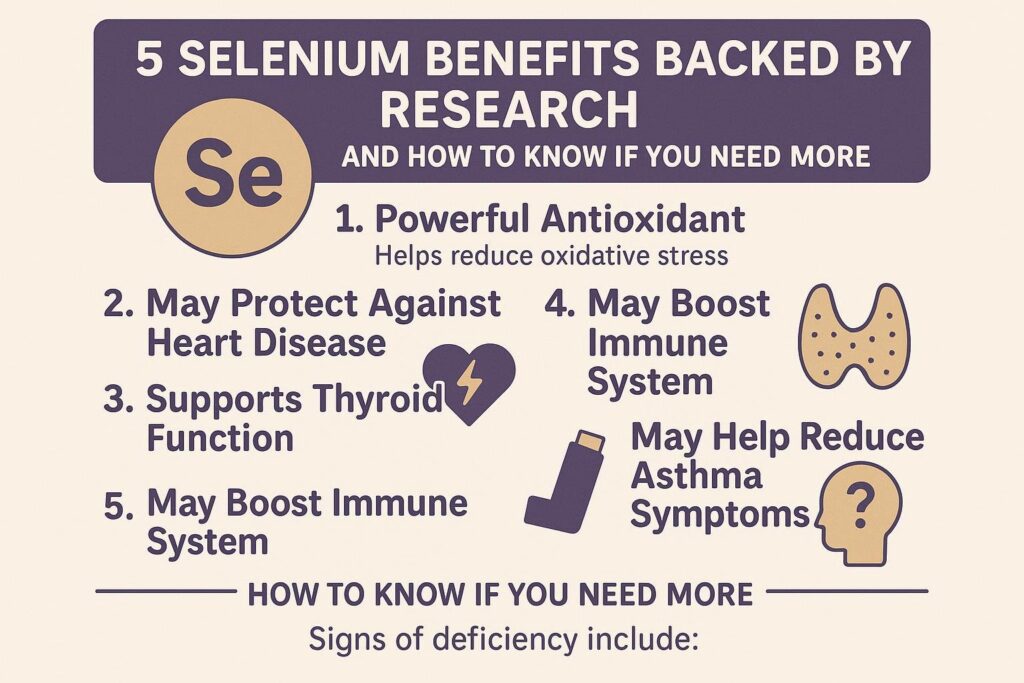
Selenium is an essential mineral found in various foods. It plays a vital role in human health by contributing to thyroid function and defense against oxidative stress. Numerous studies highlight the benefits of selenium. This article explores five key benefits and signs you might need more selenium.
1. Selenium Boosts Immune Health
Selenium contributes to a strong immune system. Research indicates that selenium supplementation enhances the ability to fight off infections. Selenium assists in generating antibodies and activates antioxidant enzymes that protect immune cells from damage.
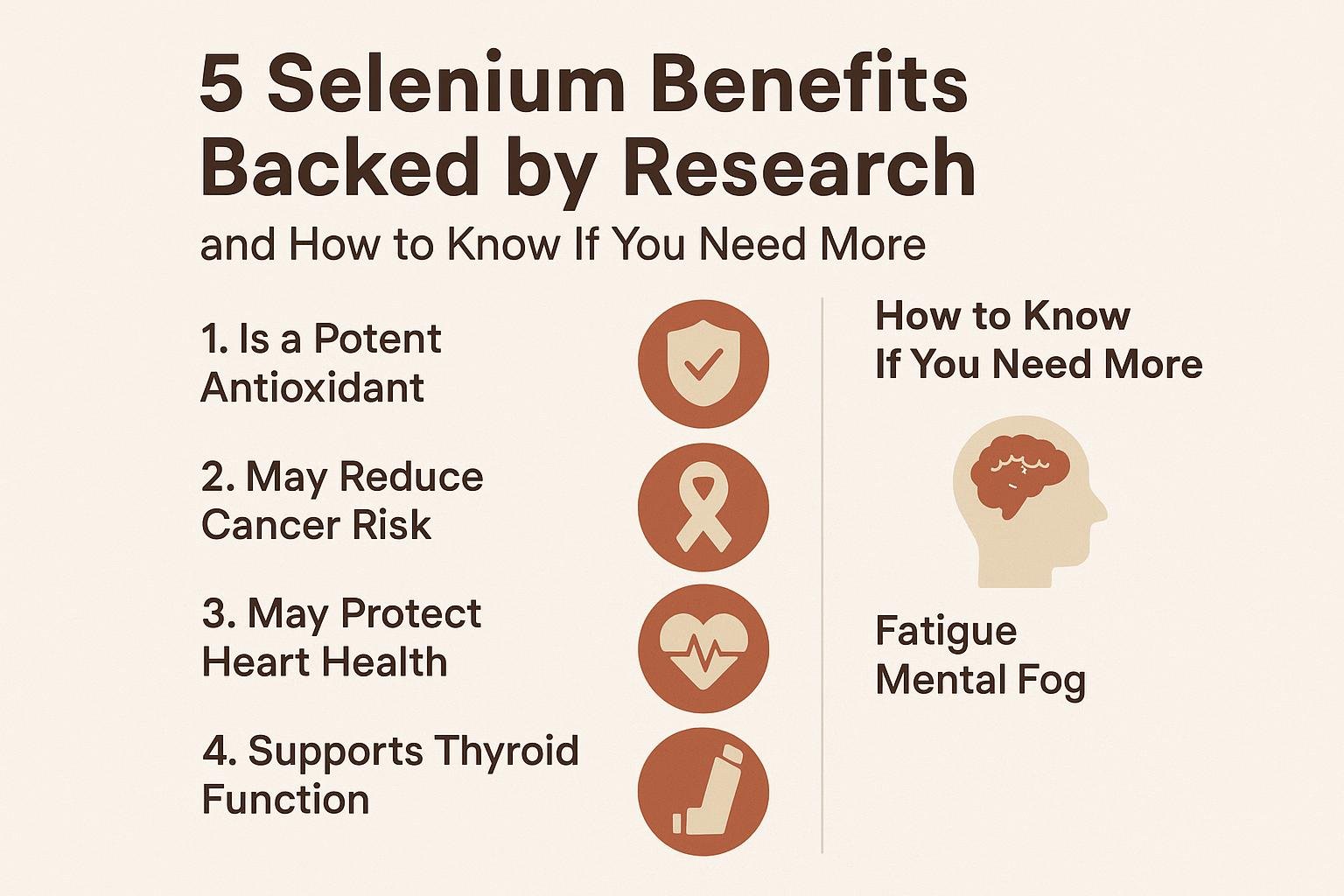
How to Know If You Need More
Frequent infections or slow recovery may indicate a need for more selenium. Consider including selenium-rich foods like nuts, fish, and eggs in your diet.
2. Selenium Protects Against Oxidative Stress
Selenium is an effective antioxidant. It neutralizes free radicals that cause cell damage, reducing the risk of chronic diseases such as cancer and cardiovascular conditions. Multiple studies support selenium’s role in minimizing oxidative stress.
Signs of Insufficient Selenium
If you notice signs of premature aging or have a family history of chronic diseases, you may lack selenium. Integrate foods like mushrooms and sunflower seeds into your meals to boost selenium intake.
3. Selenium Supports Thyroid Function
Selenium is crucial for thyroid health. It helps convert inactive thyroid hormones into active forms. Adequate selenium levels ensure proper thyroid function, which regulates metabolism and energy levels.
Indicators You May Need More
Symptoms like fatigue, weight gain, or mood changes might suggest low selenium. By consuming selenium-rich foods like tuna and Brazil nuts, you can support optimal thyroid function.
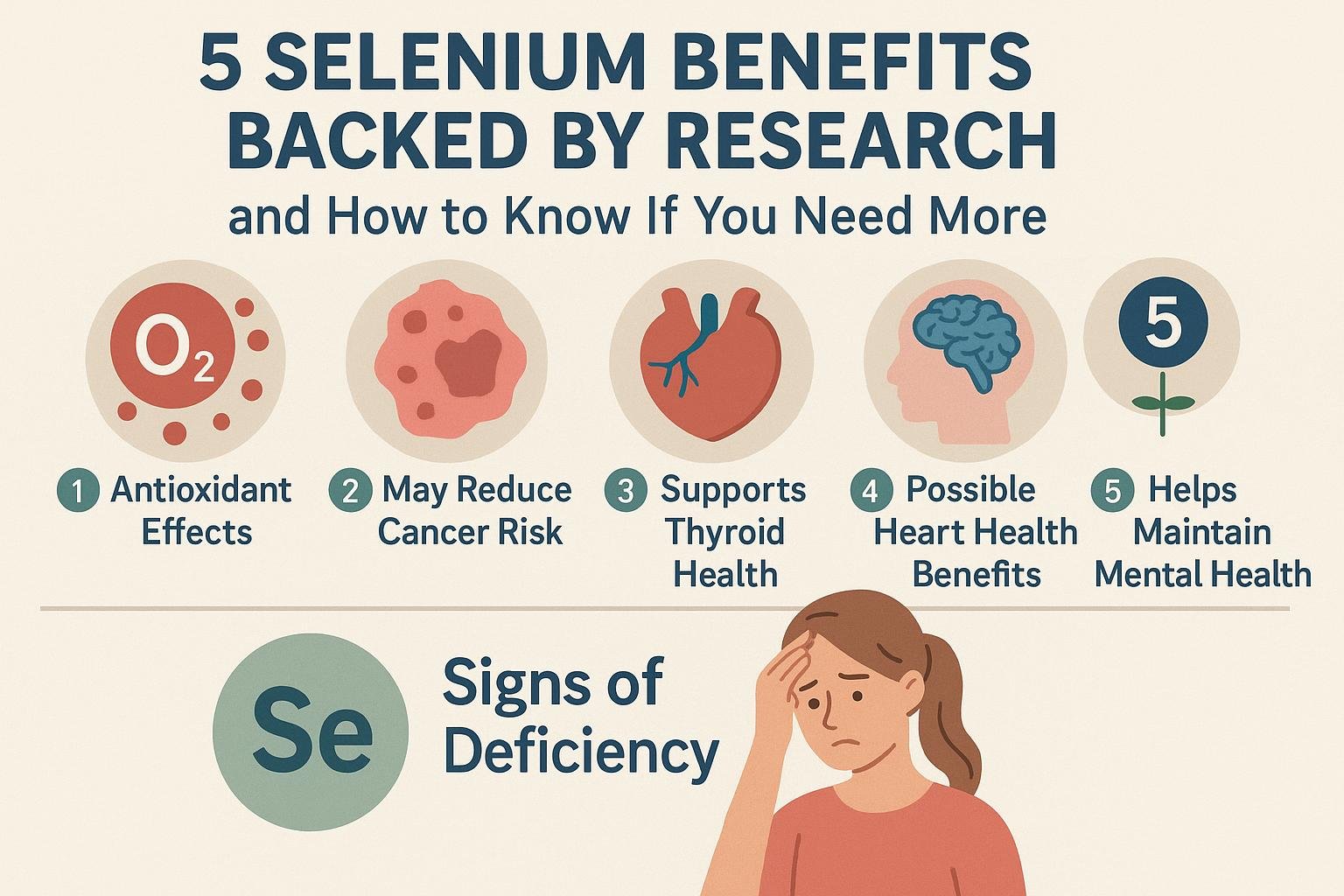
4. Selenium May Enhance Cognitive Function
Selenium supports brain health. Studies show a link between higher selenium levels and improved cognitive function in older adults. It may play a role in protecting against cognitive decline and disorders like Alzheimer’s disease.
Symptoms of Deficiency
Signs such as memory loss or difficulty concentrating may point to a selenium shortfall. Nuts, cereals, and brown rice provide a good source of selenium and can be included in your diet to enhance brain health.
5. Selenium Promotes Heart Health
Selenium affects cardiovascular health positively. It helps reduce inflammation, preventing plaque build-up in arteries. Research associates sufficient selenium levels with a lower risk of heart disease.
Signals That Suggest More Selenium Is Needed
Risk factors like high cholesterol or high blood pressure may indicate the need for more selenium. Incorporate selenium-rich foods like spinach and chicken to support heart health.
Pros and Cons of Selenium Supplementation
Pros:
- Convenient Intake: Supplements make it easy to meet daily selenium needs.
- Controlled Dosage: Ensures a precise amount of selenium is consumed.
- Additional Nutrients: Some supplements contain other helpful nutrients.
Cons:
- Overdose Risk: Excessive intake can lead to selenium toxicity.
- Variable Efficacy: Supplements may not work the same for everyone.
- Potential Side Effects: Some experience gastrointestinal issues with supplements.
Conclusion
Selenium plays a vital role in maintaining overall health, providing benefits ranging from improved immunity to enhanced heart health. By listening to your body’s signals and adjusting your diet accordingly, you can ensure adequate selenium intake. While selenium-rich foods are a primary source, supplements can also help. Consult a healthcare provider before starting any new supplement. Maintaining balanced selenium levels is key to reaping its health benefits.
Incorporate selenium into your daily nutrition and monitor for signs that indicate more might be needed. Staying informed about essential nutrients like selenium ensures you maintain a healthy and active lifestyle.