
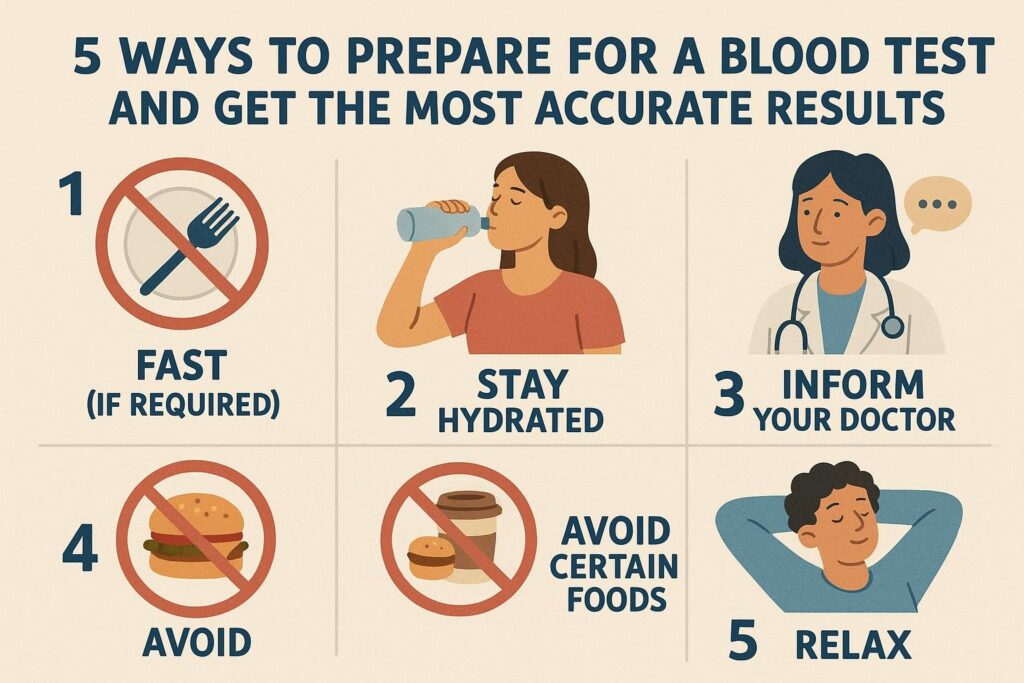
Blood tests offer critical insight into your health. Correct preparation helps secure accurate results. Follow these five steps to ensure your blood test delivers precise outcomes.
1. Follow Fasting Instructions
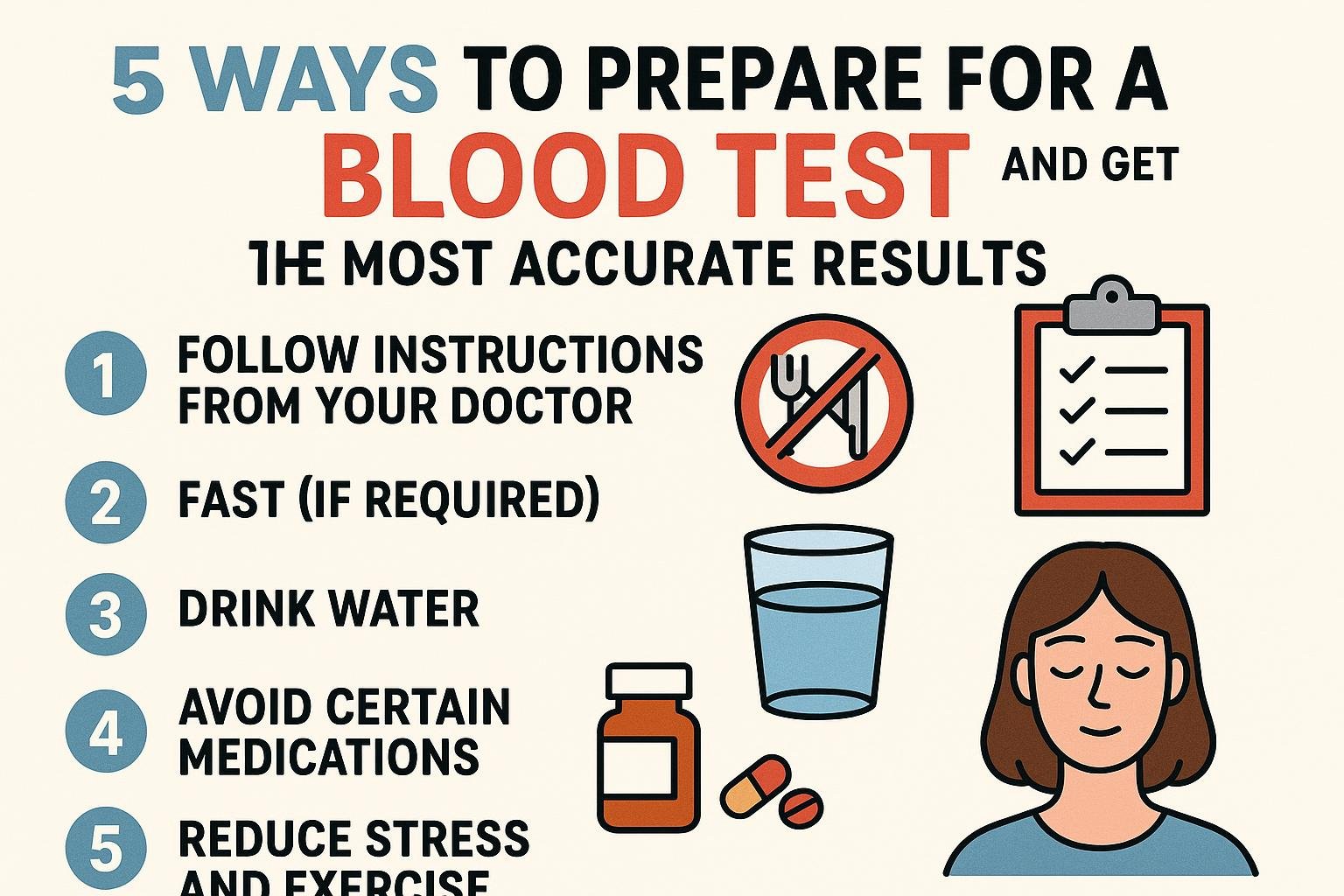
Doctors often recommend fasting before a blood test. Fasting typically lasts 8 to 12 hours. Avoid eating or drinking anything but water. Coffee and tea are not acceptable during fasting. These beverages might affect test results. Fasting helps ensure the clear measurement of glucose, triglycerides, and lipids. Not every test requires fasting. Check with your healthcare provider to know if fasting is needed for your specific blood test.
Benefits of Fasting Before a Blood Test
- Accurate Glucose Levels: Eating influences your blood sugar. Fasting ensures precise glucose measurements.
- Correct Lipid Panel Reading: Foods affect triglycerides and cholesterol levels. A fasting state provides a more reliable lipid panel.
Drawbacks of Fasting
- Hunger: Fasting can cause hunger or discomfort. Plan your meals before and after the fasting period to manage this.
- Thirst: You cannot drink anything but water. Avoid dehydration by consuming enough water.
2. Stay Hydrated
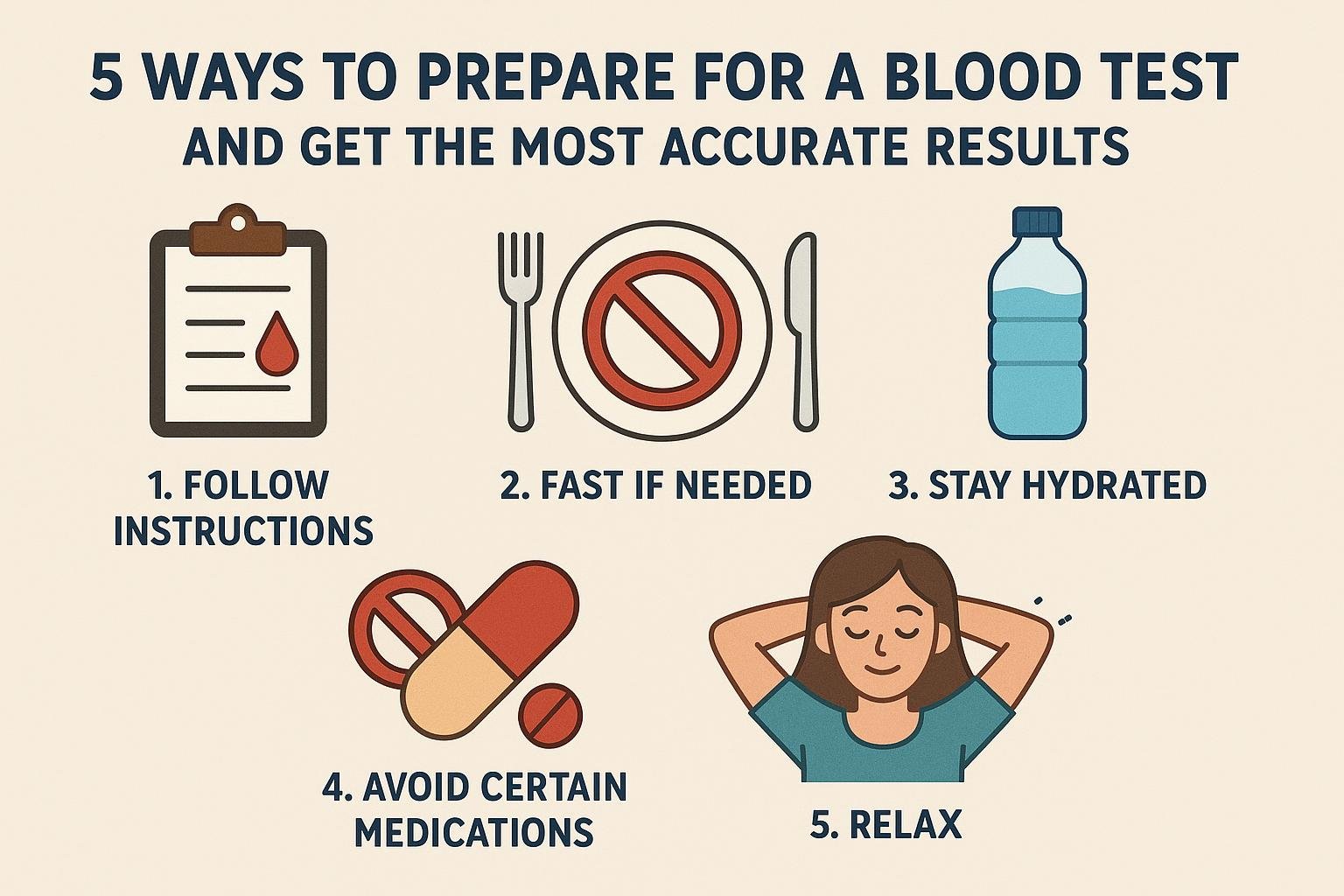
Drinking water before a blood test is crucial. Proper hydration ensures easier blood withdrawal. Water makes your veins more visible and accessible. Drink several glasses of water the day before and a few hours before the test. Avoid alcohol and caffeine. They cause dehydration, affecting test results.
Advantages of Proper Hydration
- Easier Blood Draw: Hydrated veins make it easier for the technician to find your vein and draw blood.
- Clearer Plasma: Hydration leads to clearer plasma, aiding in more accurate test results.
Potential Issues with Dehydration
- Difficult Blood Withdrawals: Dehydration makes veins collapse, complicating blood draws.
- Impaired Results: Thick blood due to dehydration may alter test interpretations.
3. Avoid Certain Activities and Substances
Some activities and substances can skew blood test results. Avoid smoking, alcohol, and heavy exercise before your test. They might elevate cortisol, glucose, or enzymes. Discuss medications and supplements with your doctor. Some might need temporary discontinuation.
Examples of Substances to Avoid
- Alcohol: Impacts liver tests and can alter blood composition. Cease intake at least 24 hours before the test.
- Tobacco: Affects cortisol levels. Avoid smoking on the day of the test.
- Vigorous Exercise: Raises enzyme levels. Refrain from heavy physical activities a day before your test.
Potential Consequences of Activity and Substance Use
- Inaccurate Liver Functions: Alcohol can lead to incorrect liver enzyme readings.
- Altered Hormone Levels: Tobacco might change cortisol levels, affecting stress hormone tests.
4. Wear Suitable Attire
Choose accessible attire on the day of your test. Wear a short-sleeved shirt or one with sleeves that roll up easily. This helps the technician access your arm swiftly. Comfort is also key, as tight clothing can restrict circulation, complicating blood withdrawal. A comfortable outfit might reduce anxiety too.
Benefits of Suitable Attire
- Simplicity in the Procedure: Easily accessible arms benefit both you and the technician.
- Increased Comfort: Comfortable clothing minimizes stress and discomfort during the test.
5. Discuss Any Concerns with Your Doctor
Talk to your doctor before the test if you have questions or anxieties. Inform them about any symptoms or medical conditions. Clear communication ensures they choose the right tests for you. If you experienced adverse reactions during previous blood draws, inform them as well. They might adjust the process to increase comfort.
Importance of Open Discussion
- Personalized Advice: Doctors can provide preparation guidelines tailored to your health.
- Stress Reduction: Knowing what to expect from the process keeps anxiety at bay.
Addressing Phobias or Previous Issues
- Fear of Needles: Notify your doctor if you fear needles. They might employ calming techniques.
- Vasovagal Response: Inform about any history of fainting during blood draws. Precautionary measures can be taken.
Conclusion
Proper preparation for a blood test ensures accurate results. By following fasting instructions, remaining hydrated, avoiding certain activities, wearing suitable attire, and discussing concerns with your doctor, you improve the likelihood of obtaining precise outcomes. These steps contribute to effective healthcare management, empowering you with reliable health information.