
Exposure to heavy metals can significantly impact health. Detecting symptoms early and taking appropriate steps can prevent long-term damage. This article explores common warning signs of heavy metal exposure and how to get tested.
What Are Heavy Metals?
Heavy metals are dense metals that can be toxic. Common examples include lead, mercury, cadmium, and arsenic. These metals occur naturally in the environment, but exposure often results from human-made sources.
Sources of Heavy Metal Exposure
Heavy metal exposure can occur in various settings:
- Occupational Exposure: Industries such as mining and construction.
- Environmental Sources: Contaminated water, air pollution.
- Consumer Products: Paint, batteries, and some cosmetics.
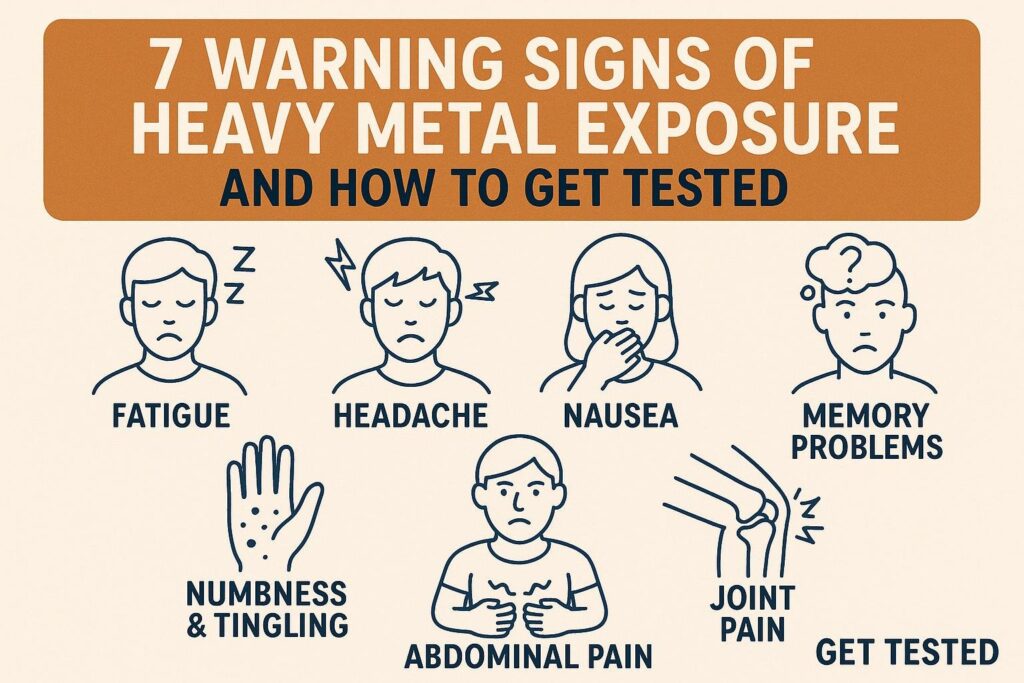
Warning Signs of Heavy Metal Exposure
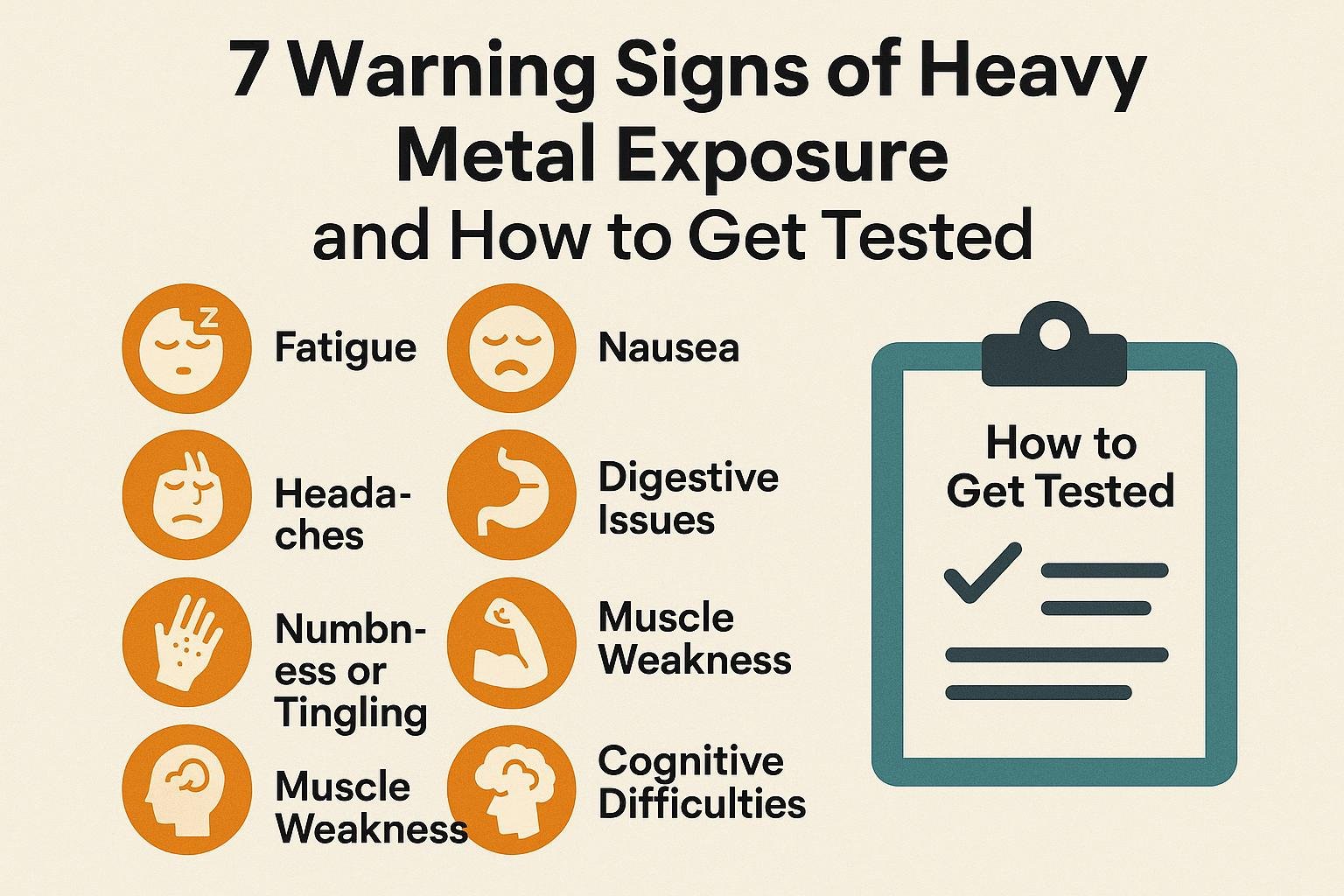
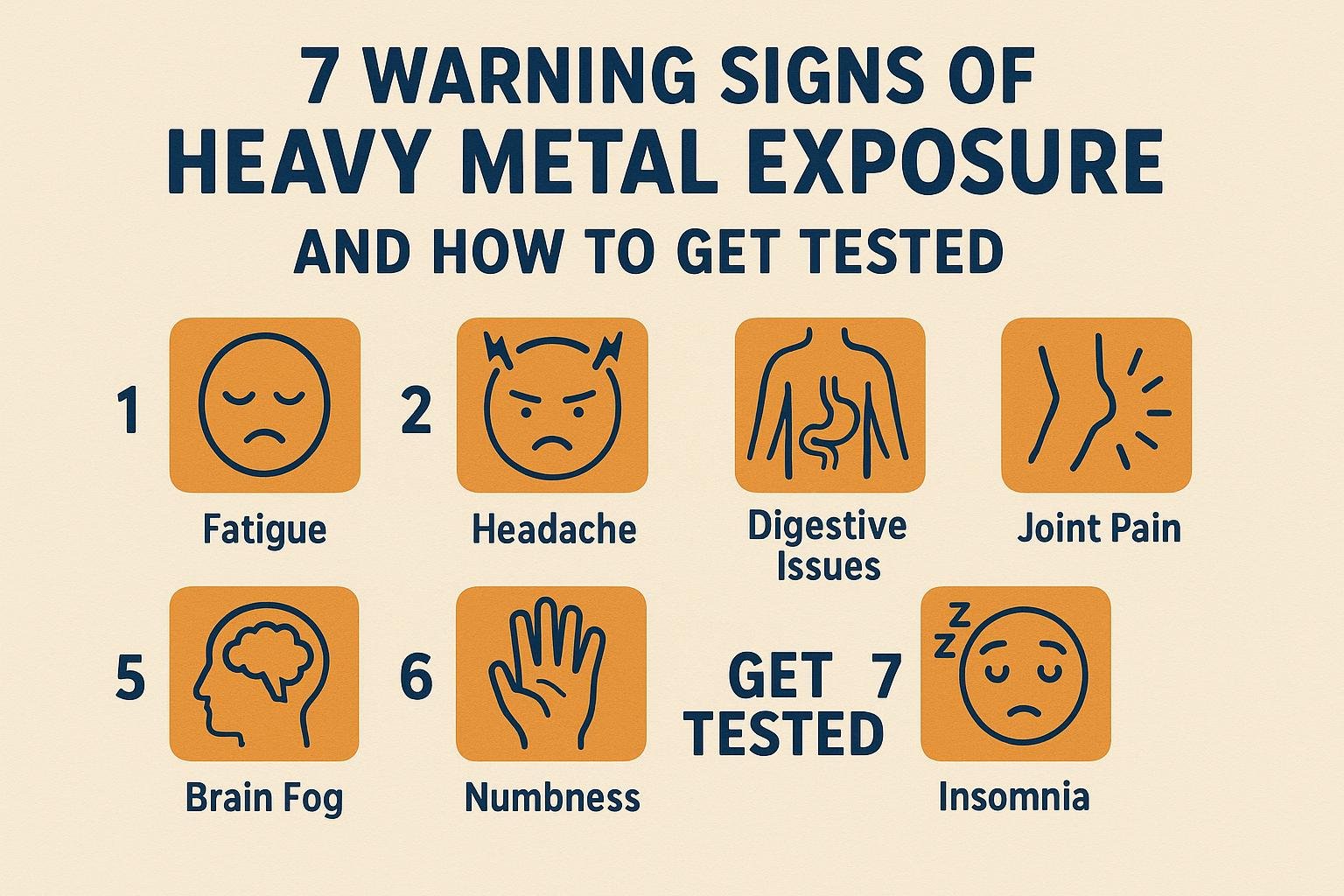
Identifying symptoms early can help in taking corrective measures. Here are seven signs that indicate possible exposure:
1. Fatigue and Weakness
Heavy metal exposure can lead to unexplained tiredness. People may feel weak, even without physical exertion.
2. Digestive Problems
An upset stomach, nausea, and abdominal pain might indicate heavy metals affecting the digestive system.
3. Joint and Muscle Pain
Joint and muscle pain without an apparent cause is a common symptom. This pain may persist even after rest.
4. Difficulty Breathing
Exposure to metals like cadmium can cause respiratory issues. Shortness of breath and coughing might occur.
5. Neurological Symptoms
Metals like mercury affect the nervous system. Symptoms include memory loss, confusion, and dizziness.
6. Skin Changes
Persistent skin conditions, such as rashes or irritation, could signal heavy metal toxicity. These changes may not respond to standard treatment.
7. Mood Disorders
Anxiety, depression, or mood swings can arise from heavy metal exposure. These symptoms may accompany other physical signs.
Testing for Heavy Metal Exposure
Timely testing helps confirm exposure and decide on treatment. Here are the common testing methods:
1. Blood Testing
Blood tests can detect recent exposure to heavy metals. The test measures the concentration of metals in the bloodstream.
2. Urine Testing
Urine tests help in assessing the amount of heavy metals excreted. This method is often used for metals like arsenic.
3. Hair Analysis
Hair samples can indicate long-term exposure. This test provides an overview of metal buildup over time.
4. X-Ray Fluorescence
This scanning method analyzes bone lead content. It is non-invasive and effective for detecting lead exposure.
Pros and Cons of Testing Methods
Each method has its advantages and limitations.
- Blood Testing: Accurate for recent exposure but not for past exposure.
- Urine Testing: Useful for ongoing exposure but has a short detection time.
- Hair Analysis: Provides long-term exposure data but can be affected by external contamination.
- X-Ray Fluorescence: Non-invasive but may not be available everywhere.
How to Reduce Heavy Metal Exposure
Preventive measures can minimize exposure risks:
- Ensuring Clean Water: Use filters to remove potential contamination.
- Proper Workplace Safety: Wear protective gear if working in high-risk industries.
- Checking Household Products: Avoid products known for containing heavy metals.
Consult a Healthcare Professional
If you suspect heavy metal exposure, consult a healthcare professional. They can guide you on testing options and treatment plans.
Conclusion
Awareness of heavy metal exposure signs is crucial. Understanding symptoms and testing methods can lead to better health outcomes. By taking preventive measures and seeking medical advice, you can manage and reduce risks associated with heavy metals.