
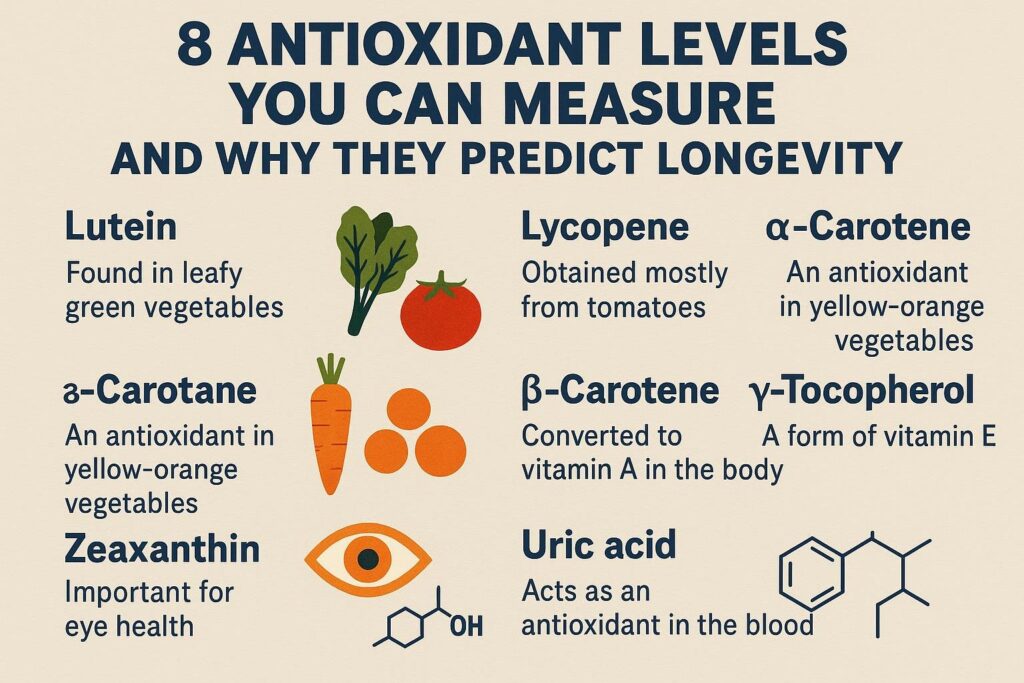
Modern research has increasingly focused on the role of antioxidants in predicting longevity. Antioxidants combat oxidative stress, a key factor in aging and various diseases. This article explores eight antioxidant levels you can measure, explaining how they may indicate longer life expectancy.
1. Vitamin C
Vitamin C is a water-soluble antioxidant. It protects cells from damage and boosts the immune system. High levels of Vitamin C correlate with lower risks of chronic diseases. Blood tests can measure Vitamin C levels, indicating how well your diet supports health.
Image: 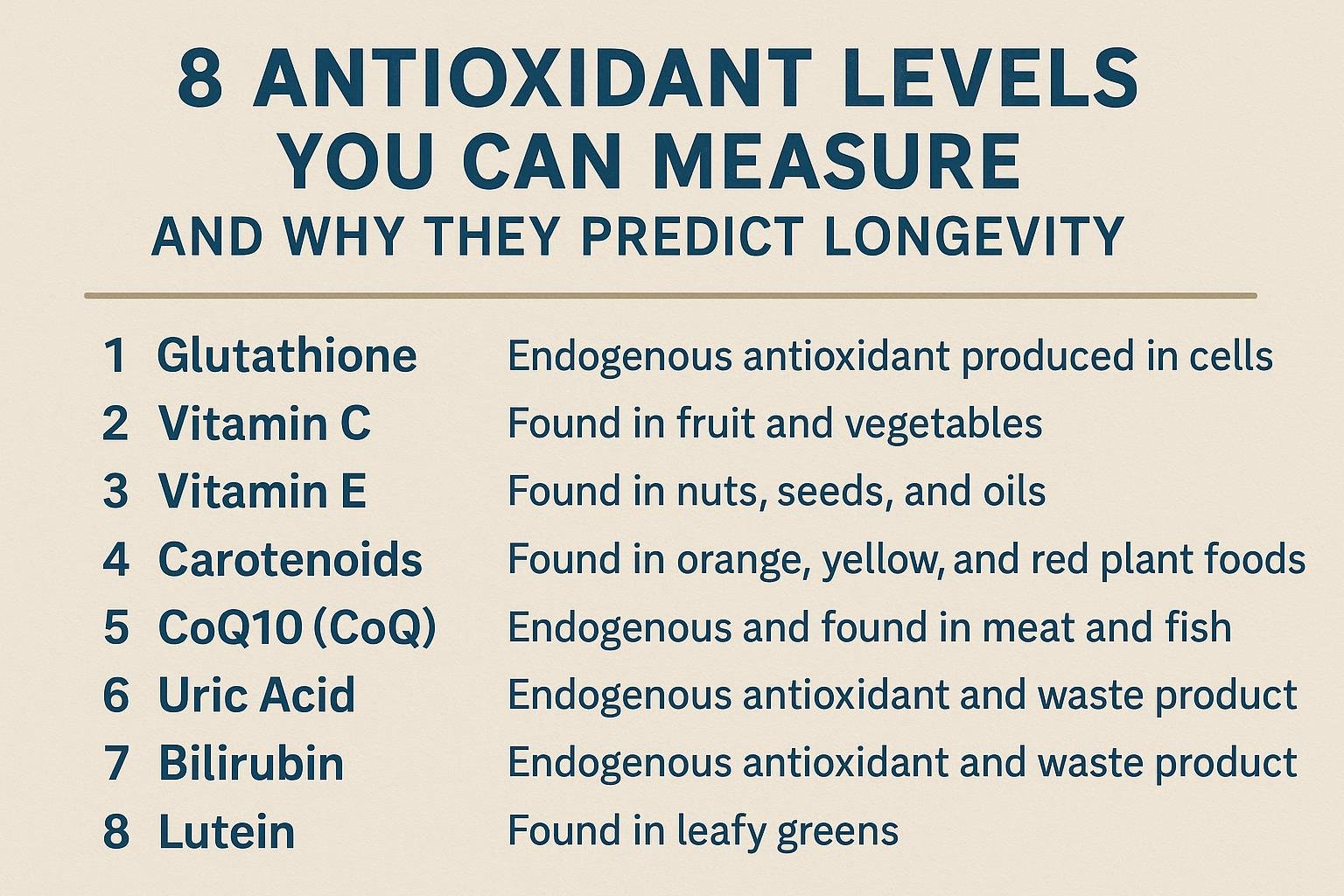
Pros:
– Supports immune health
– Reduces inflammation
– Aids in collagen production
Cons:
– High doses may lead to digestive issues
2. Vitamin E
Vitamin E is a fat-soluble antioxidant. It protects cell membranes from oxidative damage. Measuring Vitamin E levels can provide insights into heart and brain health. Adequate Vitamin E intake is linked to improved cardiovascular function.
Pros:
– Prevents oxidative damage
– Supports skin health
– Enhances immune function
Cons:
– Excessive intake can interfere with blood clotting
3. Glutathione
Glutathione is a powerful antioxidant produced by the body. It detoxifies cells and supports the immune system. Blood tests can measure Glutathione levels, reflecting overall health and aging. Maintaining optimal Glutathione is essential for reducing disease risk.
Pros:
– Detoxifies the body
– Supports liver function
– Fights oxidative stress
Cons:
– Levels can deplete with age or stress
Image: 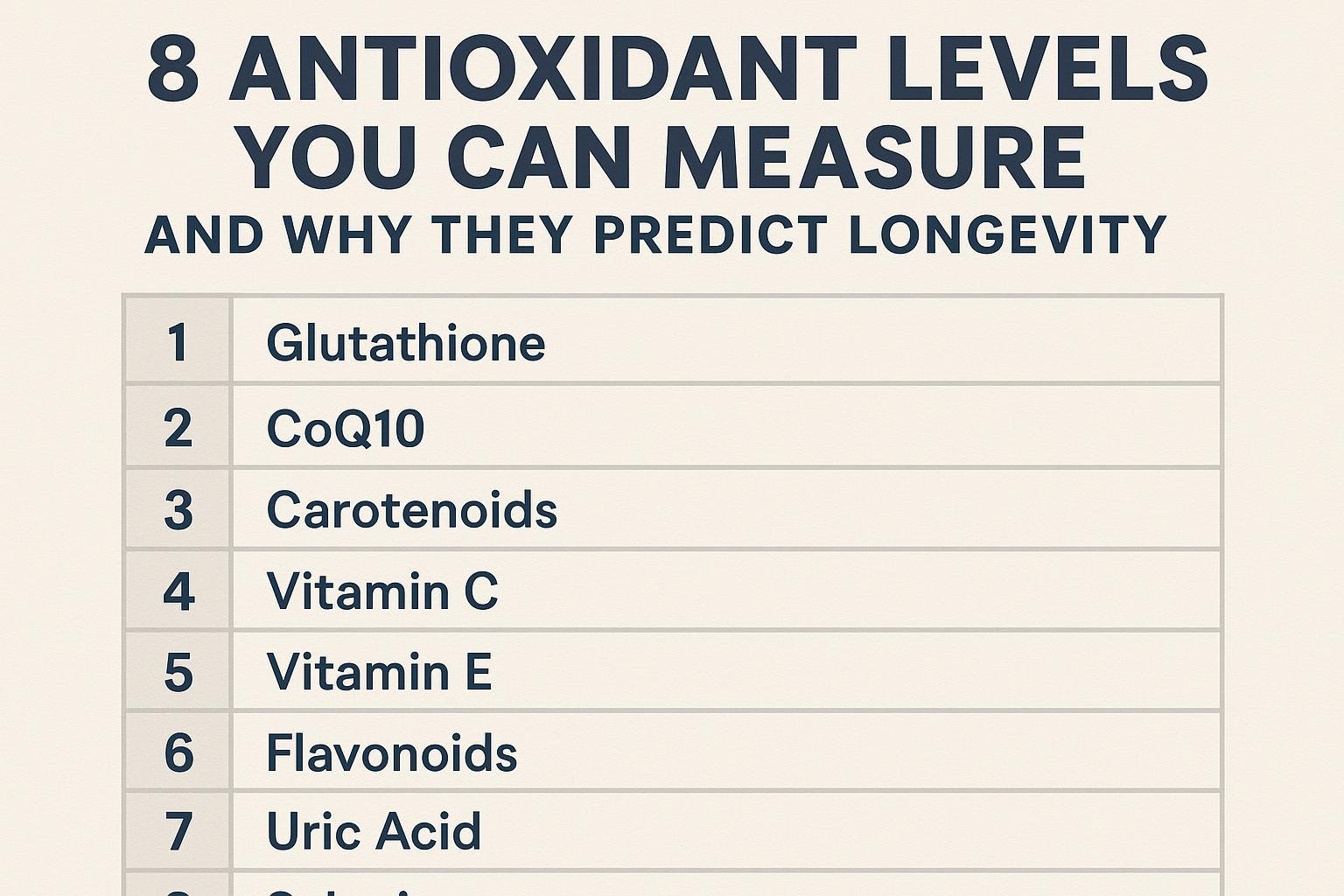
4. Coenzyme Q10
Coenzyme Q10 aids energy production and acts as an antioxidant. It combats oxidative damage in the body. Testing for Coenzyme Q10 levels reveals insights into energy metabolism and heart health. Low levels may indicate a need for dietary changes or supplements.
Pros:
– Supports heart health
– Enhances energy levels
– Protects cells from damage
Cons:
– Supplementation may be expensive
5. Alpha-Lipoic Acid
Alpha-lipoic acid is a unique antioxidant that operates in both water and fat environments. It regenerates other antioxidants and enhances energy metabolism. Blood tests measuring alpha-lipoic acid levels can indicate metabolic efficiency and oxidative protection.
Pros:
– Regenerates other antioxidants
– Improves insulin sensitivity
– Reduces inflammation
Cons:
– May interact with thyroid medications
6. Carotenoids
Carotenoids are pigments found in plants that act as antioxidants. They include beta-carotene, lutein, and zeaxanthin. Blood tests can measure carotenoid levels, suggesting dietary intake of fruits and vegetables. High carotenoid levels are linked to reduced disease risk.
Pros:
– Supports eye health
– Reduces risk of chronic diseases
– Improves skin health
Cons:
– Excessive intake of some carotenoids can cause skin discoloration
7. Resveratrol
Resveratrol is a plant compound with antioxidant properties. It is found in grapes, red wine, and berries. Testing for resveratrol levels reveals its role in heart health and aging. Resveratrol is associated with improved longevity and reduced inflammation.
Pros:
– Supports cardiovascular health
– Reduces inflammation
– Provides anti-aging benefits
Cons:
– Resveratrol supplements vary in quality
8. Bilirubin
Bilirubin is a byproduct of red blood cell breakdown. It has antioxidant properties and may protect cells from oxidative damage. Blood tests measuring bilirubin levels can indicate liver function and oxidative stress. Optimal bilirubin levels suggest better longevity prospects.
Pros:
– Protects cells from oxidative damage
– Acts as a measure of liver health
– Suggests reduced risk of certain diseases
Cons:
– High levels may indicate liver issues
Conclusion
Understanding these eight antioxidant levels provides valuable insights into your health and longevity. Regular testing and maintaining a healthy diet rich in fruits and vegetables ensures optimal antioxidant levels. By measuring these antioxidants, you can take proactive steps towards a longer, healthier life.
Image:
By monitoring and maintaining proper antioxidant levels, you can support your body’s natural defense against aging and disease.