

Navigating the world of health diagnostics can feel overwhelming. You receive a lab report, and it’s filled with abbreviations and numbers that might not immediately make sense. What exactly is a “pathology test,” and what do those terms like MCV, MPV, or GFR really signify for your health? Understanding these fundamental diagnostic tools is crucial for anyone seeking clear, reliable insights into their body’s function.
At Daydream Health Lab, we believe that informed patients and healthcare professionals make the best decisions. Our mission is to demystify complex medical information, providing you with evidence-based explanations and precise analysis. We offer a transparent approach to understanding the various types of pathology testing available, ensuring you can interpret your results with confidence.
Whether it’s detecting early signs of disease, monitoring chronic conditions, or simply gaining a better understanding of your overall wellness, pathology tests play a pivotal role. We’re here to guide you through the process, explain what to expect, and help you grasp the actionable insights these tests provide.

What Is a Pathology Test?
A pathology test involves the examination of body tissues, fluids, or other materials to diagnose disease. Pathologists, who are medical doctors specializing in diagnosing disease using laboratory methods, analyze these samples to identify abnormalities, determine the cause of illness, and guide treatment.
Pathology is fundamentally about understanding the cause and nature of disease. It spans several sub-disciplines, including anatomical pathology (examining tissues, organs, and cells) and clinical pathology (analyzing blood, urine, and other bodily fluids). This field provides the foundation for much of modern medicine. As the Mayo Clinic explains, laboratory tests offer a snapshot of your health, revealing information your doctor can’t find during a physical exam.
In our modern laboratory facilities, our expert staff utilizes validated methods and calibrated instruments to ensure scientific integrity. We process hundreds of cases annually, providing reliable insights that clinicians and patients can trust. Dr. Emily Carrington, our CEO, emphasizes that “every result we deliver is backed by rigorous quality control workflows and the dedication of our 20-member expert team.”
Why Would Something Be Sent to Pathology?
Samples are sent to pathology when there’s a need to investigate a suspected disease or monitor an existing condition at a cellular or biochemical level. This often happens after initial clinical observations or imaging studies raise concerns, or as part of routine health screening.
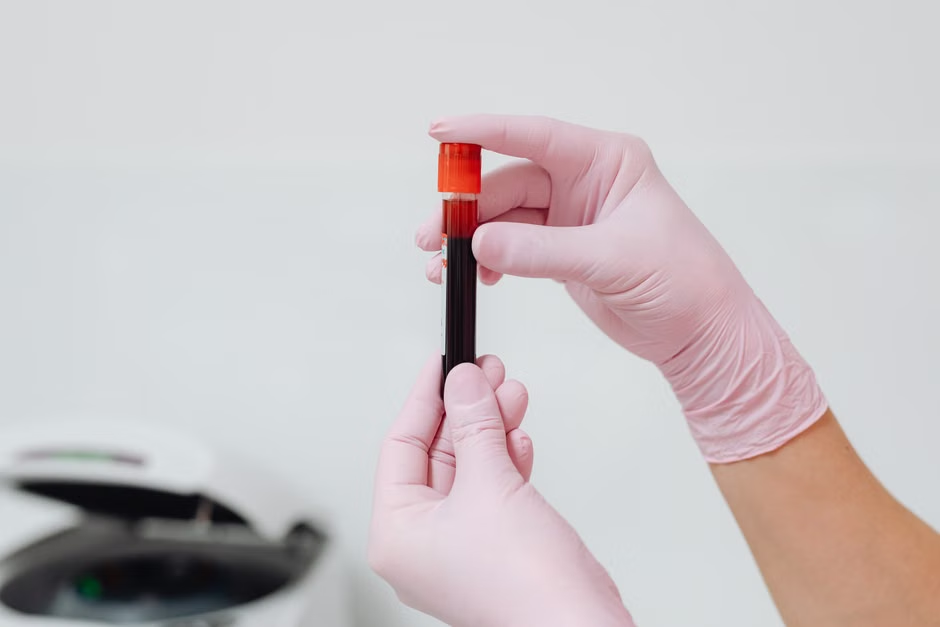
The process begins with sample collection, which might be a blood draw, a urine sample, a biopsy (a small tissue sample taken from the body), or other bodily fluids. These samples are then carefully transported to a laboratory environment where they undergo a series of precise analytical steps. For example, a tissue biopsy might be fixed, processed, embedded in paraffin, thinly sliced, stained with special dyes, and then examined under a microscope by a pathologist. Blood samples, on the other hand, are often analyzed by automated machines for cell counts and biochemical markers.
Our experienced team, including Senior Pathologist Mark Anthony, ensures that each sample is handled within a controlled environment, adhering to strict protocols. This meticulous approach allows us to perform accurate compositional analysis and deliver research-backed results. The insights gained from these examinations are critical for making informed diagnostic and therapeutic decisions, ultimately improving patient outcomes.
What Is a Pathology Test Used For?
Pathology tests are used for a wide range of purposes, from confirming infectious diseases to assessing organ function and detecting cancer. They provide objective data that helps healthcare providers understand what’s happening inside the body. This allows for early detection, accurate diagnosis, and effective management of various health issues.
Pathology tests provide crucial information for:
- Diagnosing Infections: Identifying bacteria, viruses, fungi, or parasites in blood, urine, or tissue samples (e.g., a Mantoux test for tuberculosis exposure, or a general culture).
- Detecting and Staging Cancer: Examining tissue biopsies for the presence of cancerous cells, determining their type, grade, and extent of spread.
- Monitoring Chronic Conditions: Tracking disease progression or response to treatment for conditions like diabetes, kidney disease, or autoimmune disorders.
- Assessing Organ Function: Evaluating how well organs like the kidneys, liver, or thyroid are performing (e.g., GFR for kidney function).
- Screening for Genetic Predispositions: Identifying inherited risk factors for certain diseases.
- Determining Blood Disorders: Diagnosing anemia, leukemia, and other conditions affecting blood cells (e.g., analysis of MCV, MPV, WBC, RBC).
- Guiding Treatment Choices: Helping doctors select the most effective medications or therapies based on specific test results, such as drug sensitivity testing for infections.
“Pathology provides the crucial link between symptoms and diagnosis, offering an unseen look at what’s truly affecting a patient’s health. It’s the cornerstone of precision medicine.”
What Is the Most Common Pathology Test?
Perhaps the most frequently ordered pathology test is the Complete Blood Count, or CBC. This single test provides a wealth of information about the cells in your blood, including red blood cells, white blood cells, and platelets. It’s a foundational screening tool, offering vital clues about your overall health status.
Understanding Specific Blood Test Markers
Within a CBC and other common blood panels, you’ll encounter various acronyms. Understanding what each one means can help you interpret your results more effectively:
- What is MCV in a blood test? MCV stands for Mean Corpuscular Volume. It measures the average size of your red blood cells. Abnormal MCV levels can indicate different types of anemia; for instance, a low MCV might suggest iron deficiency anemia, while a high MCV could point to vitamin B12 or folate deficiency.
- What is MPV blood test? MPV stands for Mean Platelet Volume. This measures the average size of your platelets, which are tiny cells that help your blood clot. An MPV that is too high or too low can be associated with bleeding disorders or bone marrow conditions.
- What does GFR mean in a blood test? GFR stands for Glomerular Filtration Rate. It’s a measure of how well your kidneys are filtering waste from your blood. GFR is a key indicator of kidney function, and a low GFR suggests kidney disease.
- What is blood test WBC? WBC stands for White Blood Cell count. White blood cells are critical for your immune system, fighting off infections and diseases. A high WBC count often indicates an infection or inflammation, while a low count can signal issues with bone marrow or immune suppression.
- What is RBC in blood test? RBC stands for Red Blood Cell count. Red blood cells carry oxygen from your lungs to the rest of your body. An abnormal RBC count can indicate anemia (low count) or polycythemia (high count), both of which can have significant health implications.
Considering Alternatives or Complementary Diagnostics
While pathology tests are incredibly powerful, they’re not always the only tool, nor are they always used in isolation. Sometimes, a pathology test might indicate an imbalance, but other diagnostic methods are needed to pinpoint the cause or to provide a fuller picture. For example, imaging studies like X-rays, MRIs, or CT scans provide structural information that pathology can’t. A physical exam by a doctor also offers crucial clinical context that laboratory data alone cannot convey.
For certain concerns, different types of lab work might be more appropriate or complementary. For instance, if a pathology test suggests a potential nutrient deficiency, a more specialized mineral assay might be recommended to precisely measure specific trace elements or heavy metals in the body. Daydream Health Lab offers various services, recognizing that optimal health often requires a multi-faceted approach. Our staff, including Head of Laboratory Margaret Anderson, often advises on the most appropriate testing strategy, ensuring we don’t just provide data, but also context.
“Good diagnostic practice involves selecting the right test for the right patient at the right time. Integrating lab results with clinical findings and other diagnostic modalities yields the most accurate and actionable insights.”
How Long Do Pathology Results Usually Take?
The turnaround time for pathology results can vary significantly depending on the type of test, the complexity of the analysis, and the volume of samples at the lab. Routine blood work, like a CBC, often yields results within 24 to 48 hours. More intricate tests, such as specialized tissue biopsies for cancer diagnosis or genetic sequencing, might take several days to a week, or even longer for highly complex cases.
Factors that influence the timeline include the need for additional staining or testing, the time required for a pathologist to meticulously review slides, and administrative processes. We prioritize clear communication regarding expected timelines for all our services. Our goal is always to deliver accurate, reliable results as efficiently as possible, while maintaining our strict quality standards. We understand the anxiety that waiting for results can create, and we strive for transparency throughout the process.
Practical Steps for Your Pathology Test
Preparing for a pathology test and understanding the follow-up can make the experience smoother and ensure the most accurate results. Here are some practical tips:
- Follow Fasting Instructions: For many blood tests, you’ll need to fast for 8-12 hours beforehand. Always confirm any dietary or medication restrictions with your healthcare provider or our lab prior to your appointment.
- Communicate Clearly: Inform your healthcare provider about any medications, supplements, or recent illnesses you’ve had. This information is crucial for interpreting your results correctly.
- Ask About Expected Timelines: Inquire about when and how you’ll receive your results. Knowing what to expect can reduce anxiety.
- Understand the Purpose: Before the test, make sure you understand why it’s being done and what information your doctor hopes to gain. Don’t hesitate to ask questions.
- Discuss Results Thoroughly: When you receive your results, schedule a follow-up with your doctor to discuss what they mean for your health. Don’t just look at the numbers; understand the context.
- Maintain Records: Keep a personal record of your test results over time. This can help you and your doctor track trends and monitor your health progress.
Understanding pathology tests is a key step in taking charge of your health. From the basics of what MCV, MPV, and GFR mean, to the broader implications of WBC and RBC counts, these insights empower you. At Daydream Health Lab, we’re committed to providing the precise analysis and clear, research-backed education you need to navigate your health journey with confidence. We offer dependable, easy-to-understand knowledge, helping you and your healthcare team make the most informed decisions for your well-being.